National Malaria Strategic Plan (NMSP) of India: 2007 – 2012
Countries: India
Published: 01/01/2007
Note: A more recent NMSP is available. View it here (link).
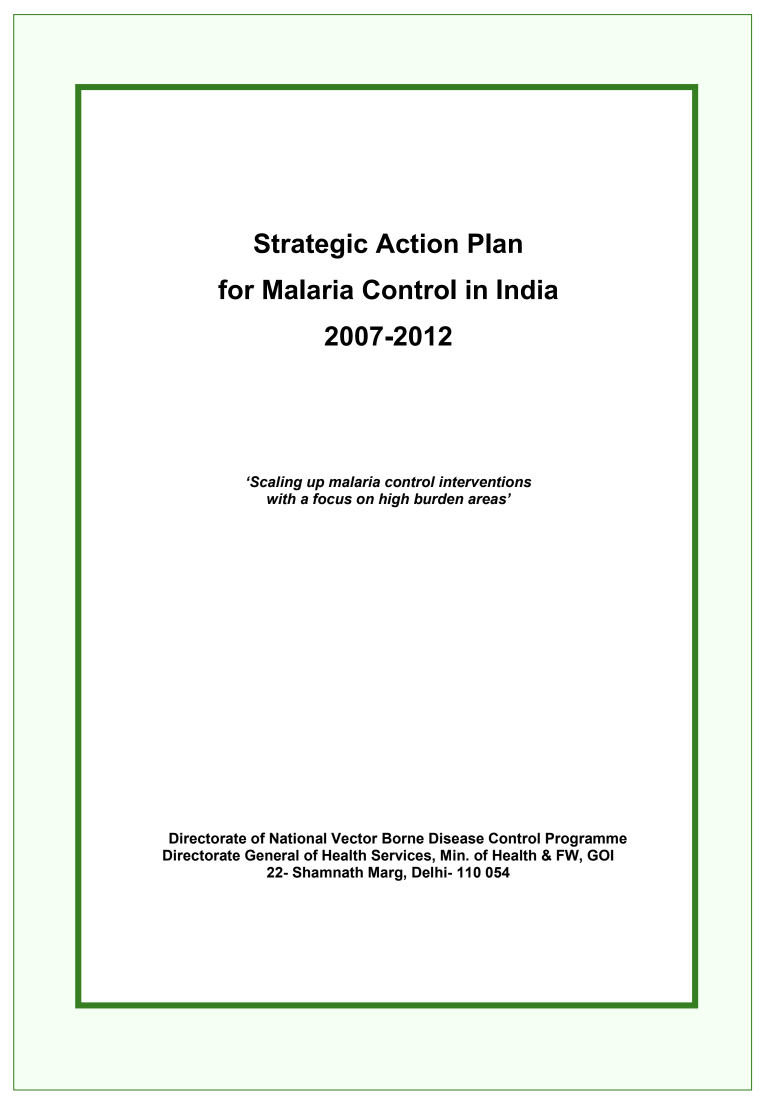
This Strategic Action Plan for Malaria Control in India 2007-2012 is intended to convey how the Government of India plans to reduce the malaria burden over the 11th five year plan period (2007-12). It focuses on the urgently needed intensified public health action in those areas where the disease remains a major cause of morbidity and mortality in the diverse ecological and epidemiological contexts encountered in India. It includes estimates of the human resources, major commodities, infrastructure and financing required for malaria case management and vector control in the whole country.
Vision: The vision of the strategic action plan is a substantial and sustained reduction in the burden of malaria in the near and mid-term, and the elimination of malaria in the long term, when new tools in combination with strengthening of health systems will make national elimination possible.
Malaria control deserves particular attention in India at present because:
- Increasing availability of new technologies and tools and international attention to malaria provide opportunities for formulating more ambitious strategies than has been possible over the last few decades.
- It had been possible in the past to reduce malaria to very low levels with intensive efforts.
- Malaria is also a cause of poverty in many areas and its control will drastically reduce the suffering as well as loss of productivity of the productive age-groups.
- Malaria is largely concentrated in tribal populations and strengthening of malaria control will be an important contribution to improving equity in the health system.
National Goals:
- At least 50% reduction in mortality due to malaria by the year 2010, as per National Health Policy document-2002
- At least 80% of those suffering from malaria get correct, affordable and appropriate treatment within 24 hours of reporting to the health system, by the year 2012
- At least 80% of those at high risk of malaria get protected by effective preventive measures such as ITNs/LLINs or IRS by 2012.
Published: 01/01/2007
Related Resources