National Malaria Strategic Plan (NMSP) of Democratic Republic of the Congo: 2007 – 2011
Countries: Dem. Rep. of Congo
Published: 04/06/2007
Note: A more recent NMSP is available. View it here (link).
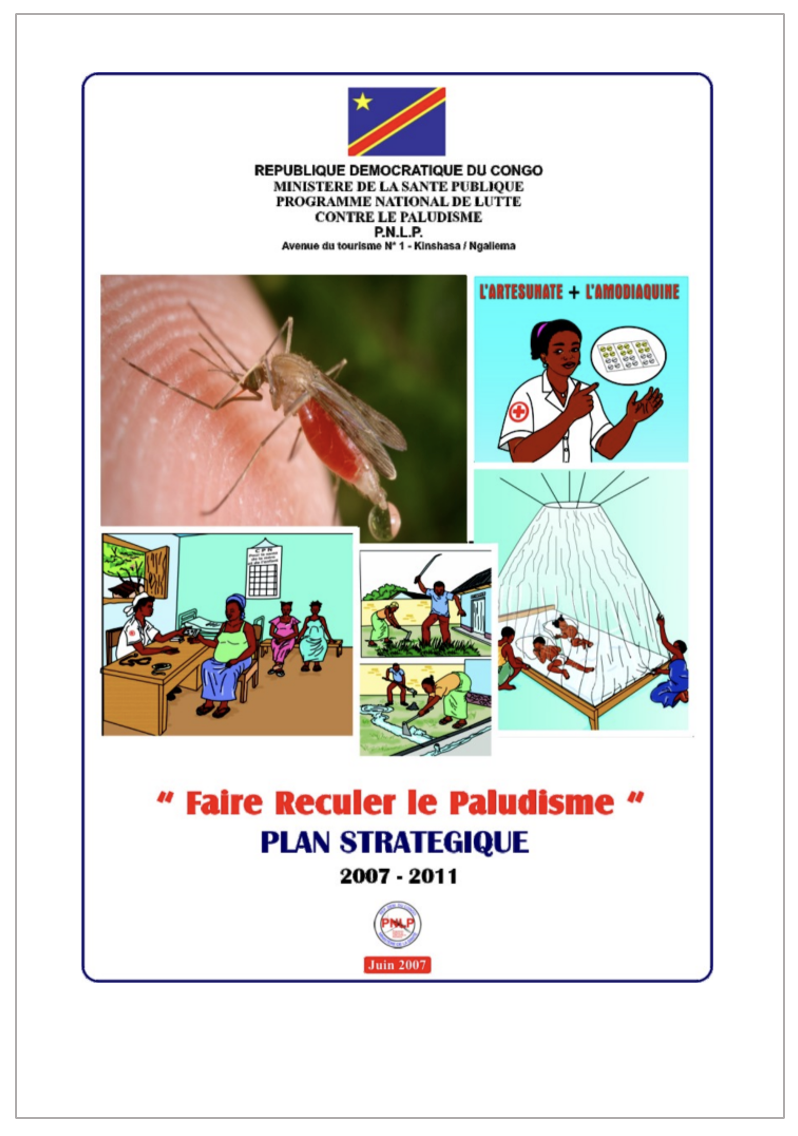
This Plan Stratégique National de Lutte contre le Paludisme (PSNLP) 2007–2011 is based on the universal vision expressed in the “Roll Back Malaria” Global Strategic Plan (2005–2015) and the findings of the evaluation of the 2002–2006 strategic plan, which complements the overall situation analysis.
Goal: The goal of the plan is to contribute to improving the health status of the population of the Democratic Republic of the Congo by reducing the human and socioeconomic burden of malaria.
Objective: The objective is to reduce malaria-specific morbidity and mortality by 50% by 2011.
Expected results by the end of 2011 are:
- 80% of people at risk of malaria sleep under insecticide-treated mosquito nets;
- 80% of households in areas targeted for indoor residual spraying with long-lasting insecticide are covered;
- 80% of pregnant women receive intermittent preventive treatment in accordance with national guidelines;
- 80% of malaria patients receive diagnosis and treatment in accordance with national guidelines at all levels of the health system;
- coordination of the malaria control program is ensured;
- data on key malaria control indicators are provided regularly.
Strategies: To achieve the aforementioned objectives, the following will be implemented:-
- improving rapid and effective case management of malaria at all levels of the health system, including within the community;
- strengthening prevention activities through individual and collective protection methods, such as insecticide-treated mosquito nets, indoor residual spraying with insecticides, and environmental management;
- implementation of intermittent preventive treatment for pregnant women;
- strengthening preparedness and response to malaria epidemics;
- strengthening participatory planning processes at all levels, including the community level;
- training;
- supply of malaria control commodities;
- improving resource management;
- developing research;
- promoting malaria control efforts;
- strengthening surveillance, monitoring, and evaluation.
Published: 04/06/2007
Related Resources