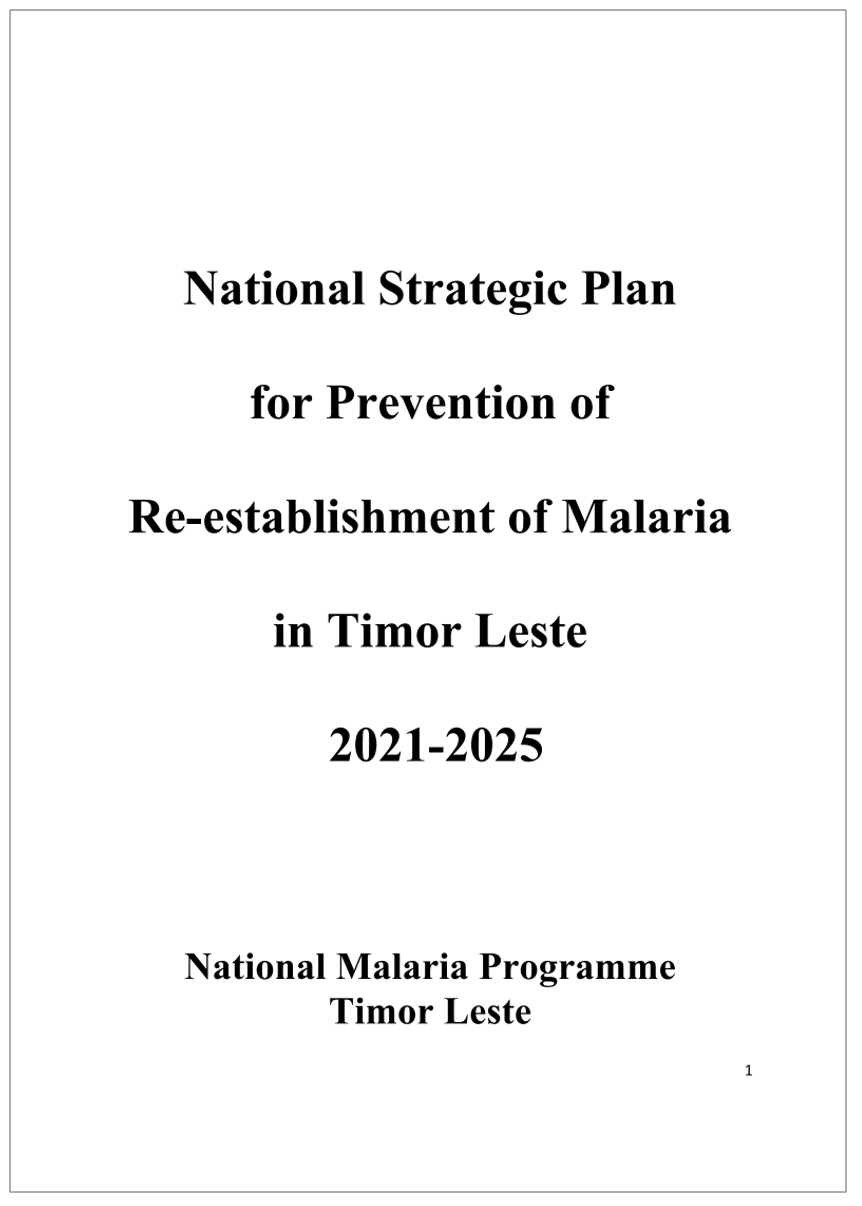
National Malaria Strategic Plan (NMSP) of Timor-Leste: 2021 – 2025
Countries: Timor-Leste
Published: 01/01/2021
The epidemiology of malaria in Timor-Leste has changed dramatically in the last 10-15 years. The last indigenous case was detected in June 2017 and external review team confirmed that indigenous malaria transmission has been interrupted in the country. This achievement is a result of a well-funded Programme with a technically strong strategy built on the foundation of a rapidly evolving health system that is providing basic health services down to the household level. Given this scenario, the National Strategic Plan for prevention of re-establishment of malaria 2021-2025 was developed in keeping with the vision, mission and objectives of the Ministry of Health of Timor-Leste building on the gains thus achieved.
The objectives of the programme for the period 2021-2025 are:
- To prevent re-establishment of malaria transmission in Timor Leste.
- To maintain zero mortality due to locally acquired malaria.
- To achieve WHO malaria-free certification.
The plan relies on three key interventions (focussed intensified surveillance and vigilance, case management and malaria prevention) and two supporting elements (expanding research and innovation for improved delivery of services and strengthening the enabling environment) as recommended in the Global Strategy for Malaria 2016-2030.
Published: 01/01/2021
Related Resources