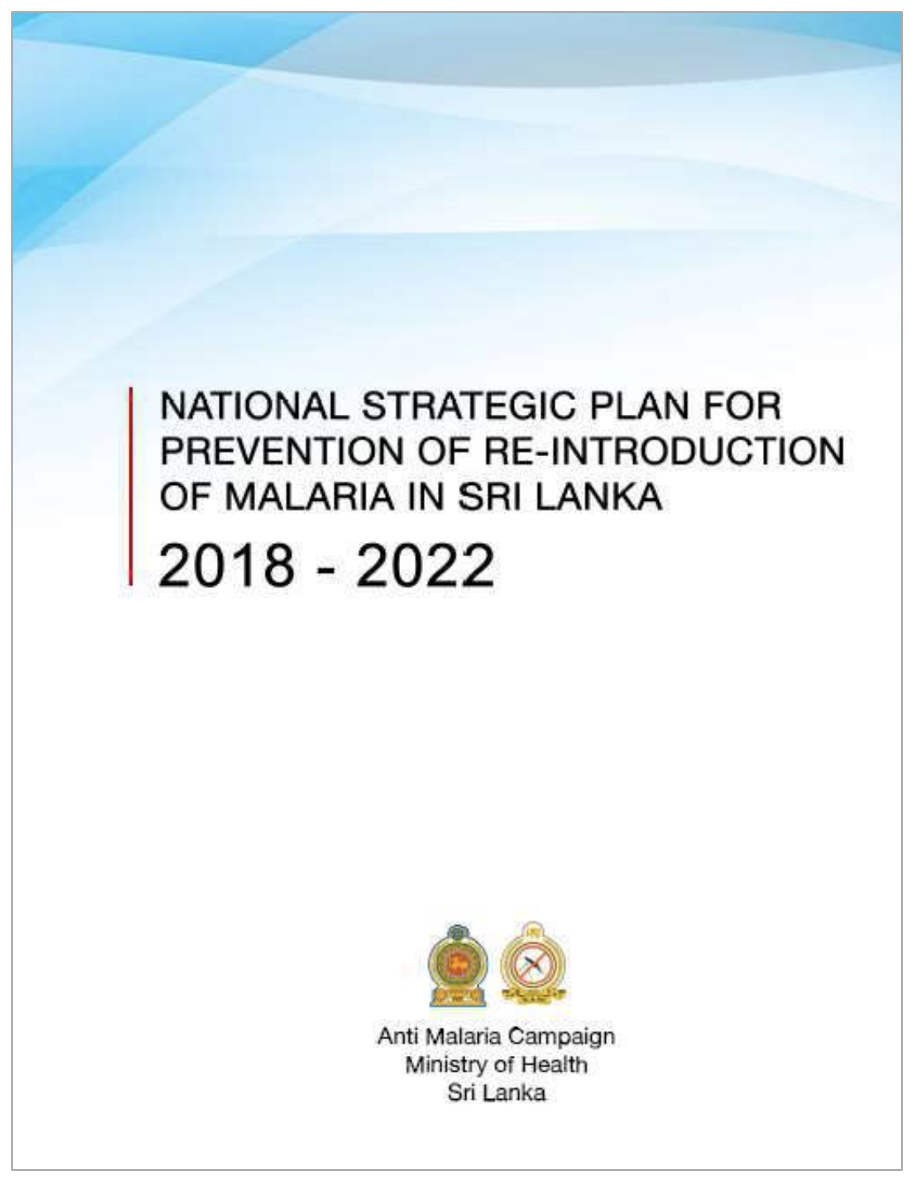
National Malaria Strategic Plan (NMSP) of Sri Lanka: 2018 – 2022
Countries: Sri Lanka
Published: 01/01/2018
Note: A more recent NMSP is available. View it here (link).
The National Strategic Plan (NSP) for prevention of re-introduction of malaria in Sri Lanka 2018- 2022 is primarily targeted to sustaining a malaria-free Sri Lanka post-WHO certification. The country received malaria-free certification from WHO in September 2016, becoming only the second country in the WHO South East Asia region to be declared malaria-free. Sri Lanka has shown remarkable success in sustaining malaria-free status for over 5 years despite the challenges of high receptivity in a tropical country and the increased vulnerability afforded by increased foreign travel among Sri Lankans to malaria endemic countries and tourists and visitors, including foreign labour, from malaria endemic countries.
The strategic priority is to prevent its re-introduction and re-establishment of malaria in Sri Lanka through imported malaria cases using the following strategic approaches are proposed:
- Continuous assessment and mapping of receptivity and vulnerability of re-introduction / reestablishment of transmission by stratification, regular monitoring and implementing mitigating measures.
- Maintaining intensified surveillance for early detection and effective treatment of malaria cases and ensuring mandatory reporting of cases in both the public and private sectors.
- Maintaining knowledge and skills of health staff.
- Ensuring availability of quality diagnostic facilities to diagnose and treat malaria cases.
- Ensuring quality and adequate coverage of interventions to prevent re-introduction/reestablishment of malaria.
- Optimising entomological surveillance and response for integrated vector management relevant for PoR.
- Strengthening outbreak preparedness, and ensuring adequate prevention and rapid response to potential malaria outbreak situations.
- Advocacy for political and financial commitment to ensure sustaining malaria-free status.
- Sustaining critical partnerships.
- Maintaining a high level of awareness of malaria and the risk of its re-introduction among politicians, clinicians and high risk groups.
Published: 01/01/2018
Related Resources