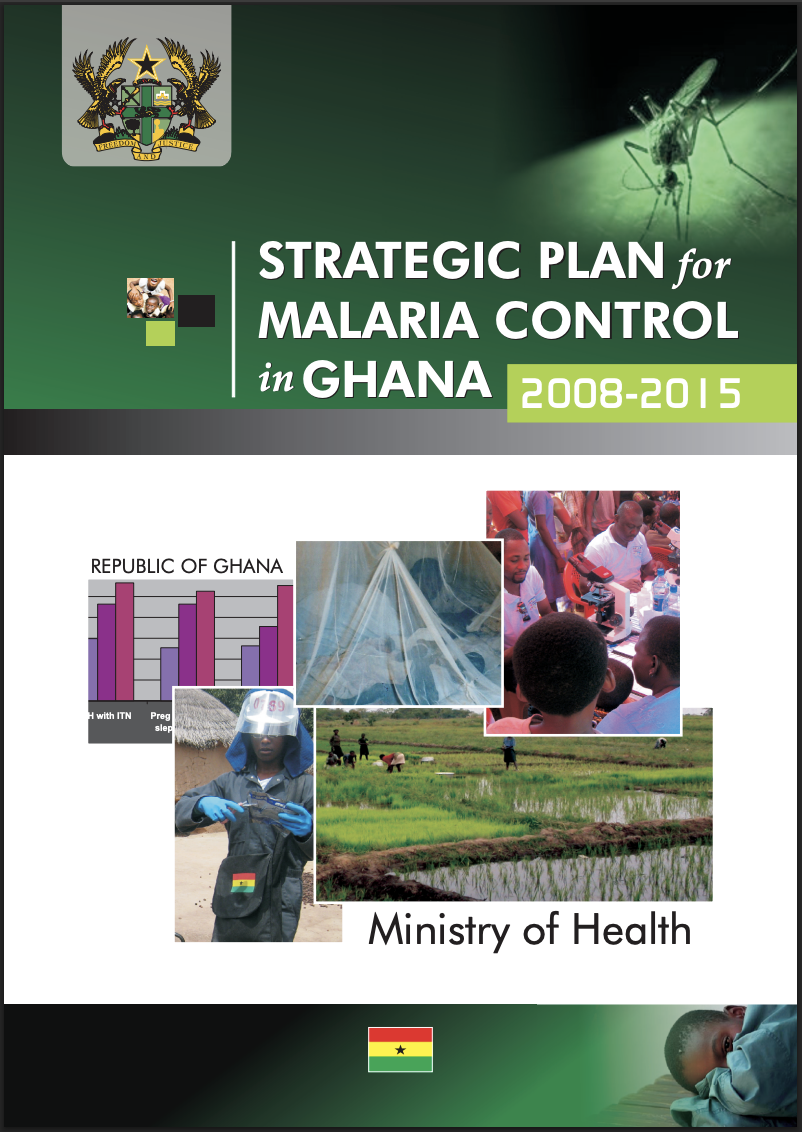
National Malaria Strategic Plan (NMSP) of Ghana: 2008 – 2015
Source(s):
Countries: Ghana
Published: 02/03/2009
Note: A more recent NMSP is available. View it here (link).
The purpose of this Strategic Plan for Malaria Control Ghana in 2008-2015 is to give strategic direction in order to attain the goal of reducing the current malaria disease burden by 75% by the year 2015 in line with the attainment of the Millennium Development Goals (MDGs).
The specific objectives of the plan are as follows:
Specific Objectives: The plan covers the areas of improving multiple prevention, improving access to prompt and effective treatment, strengthening health systems at all levels, and creating and sustaining partnership. The specific objectives are as follows:
- 100% of households will own at least one ITN
- 80% of the general population will sleep under ITNs
- Increase the number of children under-five and pregnant women sleeping under treated net from current levels to 85%
- 100% (All) pregnant women shall be on appropriate Intermittent Preventive Treatment (receive at least two or more doses of sulphadoxine-pyrimethamine under DOT)
- 90% of all structures in targeted districts will be covered through indoor residual spraying
- All (100%) health facilities will provide prompt and effective treatment using ACTs
- 90% of all patients with uncomplicated malaria will be correctly managed at public and private health facilities using ACTs
- All (100%) communities will have access to community-based treatment for uncomplicated malaria
- 90% of caretakers and parents will be able to recognize early symptoms and signs of malaria
- 90% of children under five years of age with fever will receive an appropriate ACT within 24 hours of onset.
Strategies to achieve these objectives include:
- Equip all health facilities with malaria diagnostic facilities (microscopes or RDTs) and provide effective antimalarial drugs.
- Strengthen human resource through in-service training of laboratory technicians and clinicians.
- Scale-up community based treatment of malaria in all districts through the home base care of malaria targeting children under five years living in rural areas and areas with limited access.
- ITM scale-up access to Long Lasting Insecticide Nets to achieve universal coverage – Insecticide treat. IRS.
- IRS will be scaled up rapidly, building on the models of IRS campaigns in Obuasi and the Northern Region.
- Strengthen the routine data collection system to capture reliable information, and undertake regular operational researches to provide evidence for decision making.
- Forge functional partnerships and mechanisms between departments, programmes within and outside the health sector.
Language
English
External reference
Published: 02/03/2009
Language
English
Related Resources