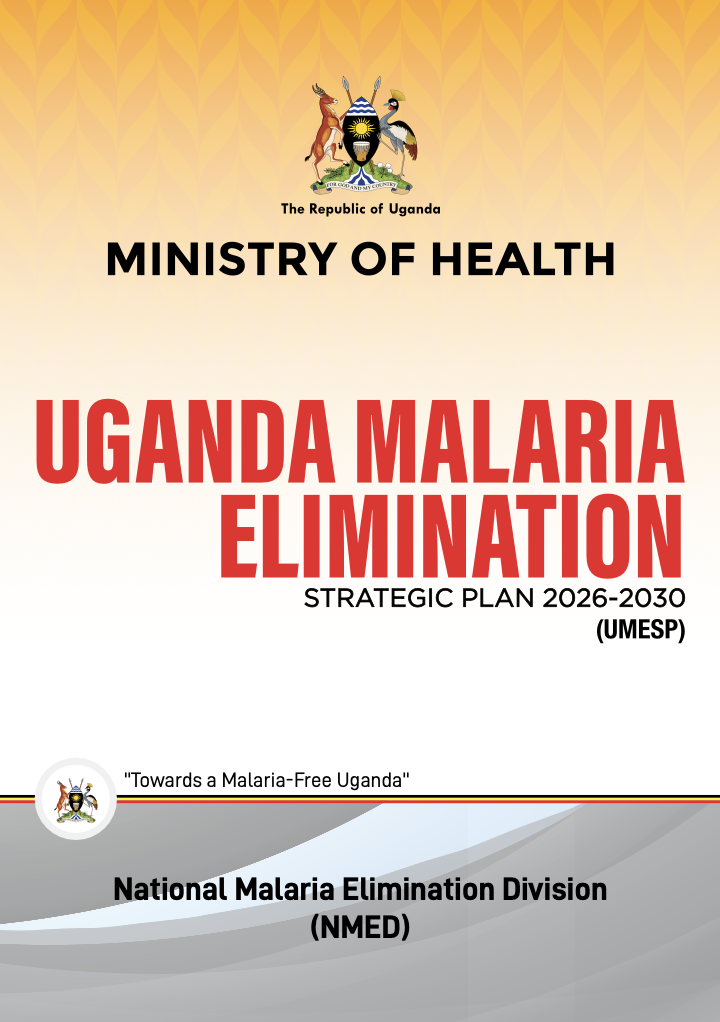
National Malaria Strategic Plan (NMSP) of Uganda: 2026 – 2030
Countries: Uganda
Published: 23/04/2026
The Uganda Malaria Elimination Strategic Plan (UMESP) 2026–2030 marks a decisive shift from malaria control to malaria elimination. This Plan articulates a bold vision: a malaria-free Uganda, where no child dies from malaria and communities thrive, free from the burden of this preventable disease.
Through this Plan, Uganda commits to transforming its malaria programme into an elimination-focused agenda—safeguarding lives, strengthening the health system, and driving national development. The UMESP 2026–2030 serves as Uganda’s roadmap to elimination, fully aligned with the WHO Global Technical Strategy for Malaria (2016–2030), the Yaoundé Declaration (2024), the RBM/30 Unity Strategic Framework, underpinned by RBM’s Big Push Against Malaria, Sustainable Development Goal 3.3, and national frameworks including the Health Policy, Health Sector Development Plan IV, and National Development Plan IV.
Vision: A malaria-free Uganda for socioeconomic growth and national development.
Goal: Achieve zero malaria deaths and cut malaria cases by at least 75% from 2024 levels (from 274 to fewer than 100 cases per 1,000 people) by 2030, reaching pre-elimination status in at least 19 districts.
Strategic Objectives
- SO1. Universal Case Management and Chemoprevention: Ensure prompt access to effective diagnosis, treatment, chemoprevention, and vaccines for all.
- SO2. Integrated Vector Management: Achieve ≥85% population protection through stratified interventions, including ITNs, IRS, larval source management, and innovative tools.
- SO3. Integrated Surveillance and Response: Establish a real-time, integrated surveillance system capable of epidemic prediction, rapid detection, and response.
- SO4. Governance, Financing, and Multisectoral Action: Strengthen decentralized programme leadership, secure sustainable financing, and promote accountability.
Published: 23/04/2026
Related Resources