Last Updated: 18/12/2024
Effectiveness of reactive case detection for malaria elimination in three archetypical transmission settings: a modelling study
Objectives
This study uses mathematical modelling to assess how baseline transmission intensity and local interconnectedness affect the impact of reactive activities in the context of other possible intervention packages.
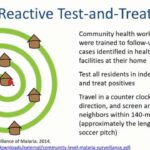
Reactive case detection (RACD) could be a powerful tool in malaria elimination, as it selectively targets transmission pockets. However, field operations have yet to demonstrate under which conditions, if any, RACD is best poised to push a region to elimination. Answering the question of how to allocate scarce community health worker time to labour-intensive RACD efforts compared to focusing on mass drug campaigns, case management of symptomatic malaria cases, or reduction of the burden of other diseases requires a clear understanding of malaria transmission at a household level and the spatial heterogeneities in transmission and connectivity.
Communities in Southern Province, Zambia, where elimination operations are currently underway, were used as representatives of three archetypes of malaria transmission: low-transmission, high household density; high-transmission, low household density; and high-transmission, high household density. Transmission at the spatially-connected household level was simulated with a dynamical model of malaria transmission, and local variation in vectorial capacity and intervention coverage were parameterized according to data collected from the area. Various potential intervention packages were imposed on each of the archetypical settings and the resulting likelihoods of elimination by the end of 2020 were compared.
Jan 2012 — Dec 2016
Related Resources