Last Updated: 11/11/2025
Reactive case detection for Plasmodium vivax malaria elimination in rural Amazonia
Objectives
The main objective is to evaluate a reactive case detection (RCD) strategy that has been tailored for rural Amazonian communities with low P. vivax endemicity and substantial spatial clustering of malaria episodes.
The study aims to test three hypotheses:
(a) individuals living in close proximity to malaria cases diagnosed by routine surveillance (index cases) are more likely to carry malaria parasites (including subpatent and asymptomatic infections) than randomly selected inhabitants living in the same area;
(b) the increased risk of infection in the proximity of index cases persists over the next few months, due to the relapsing nature of P. vivax; and
(c) molecular genotyping of parasites may help to determine the epidemiological connections among cases found by RCD.
Malaria burden in Brazil has reached its lowest levels in 35 years and Plasmodium vivax now accounts for 84% of cases countrywide. Targeting residual malaria transmission entrenched in the Amazon is the next major challenge for ongoing elimination efforts. Better strategies are urgently needed to address the vast reservoir of asymptomatic P. vivax carriers in this and other areas approaching malaria elimination.
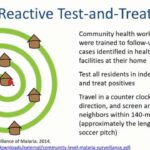
Over six months, 41 cases detected by passive surveillance triggered four rounds of RCD (0, 30, 60, and 180 days after index case enrollment), using microscopy and qPCR-based diagnosis, comprising subjects sharing the household (HH) with the index case (n = 163), those living in the 5 nearest HHs within 3 km (n = 878), and individuals from 5 randomly chosen control HHs located > 5 km away from index cases (n = 841). Correlates of infection were identified with mixed-effects logistic regression models. Molecular genotyping was used to infer local parasite transmission networks.
Drug-based Strategies
Genetics and Genomics
Impact of Interventions
P. vivax
Residual Transmission
Jan 2013 — Jul 2013
Related Resources