About MESA
In 2011, a global consultative process called malERA set out to answer a single question: what science is needed to eradicate malaria? It identified critical knowledge gaps across nine research and development areas and produced a unifying global agenda for the malaria research community.
MESA — Malaria Eradication Scientific Alliance — was founded on the premise that a global research agenda must be continuously sustained, coordinated, and aligned with endemic-country needs. That premise continues to shape MESA’s work spanning the full continuum from control to eradication.
MESA is a global alliance of researchers, funders, national malaria programs, and policymakers.
Vision
A malaria-free future
built by
a connected ecosystem
where endemic countries
drive the science
and the action.
Mission
Catalysing progress toward malaria eradication
by connecting, synthesizing, and translating
global malaria knowledge
into timely, actionable evidence
that is shaped by and responsive to
the priorities of malaria-endemic countries.
MESA is hosted by the Barcelona Institute for Global Health (ISGlobal) supporting its role as a WHO Collaborating Centre for malaria control, elimination and eradication. MESA is funded through a grant from the Gates Foundation.
What we do
MESA advances its mission through three interlinked strategic priorities:

Connect the malaria science ecosystem
Large, fragmented and often siloed – endemic-country priorities are not always reflected in research or funding decisions.
Through MESA’s network, cross-sector convenings, Correspondents Program, Forums, Science for Malaria Impact, Communities of Practice, and the MasterClasses in partnership with the Ifakara Health Institute, MESA catalyses alignment across the ecosystem, enabling researchers, funders, policymakers and country programs to move from parallel efforts toward collective impact.
MESA is uniquely positioned with demonstrated capacity to convene the global malaria community to collectively assess, debate and prioritise a research agenda, as proven through the malERA process and its Refresh. At a critical moment when funding is contracting and more must be done with less, that convening capacity is more critical than ever in ensuring the priorities of malaria-endemic countries drive what is studied and funded.

Synthesize and translate knowledge to inform action
Knowing what is known, what is underway, and where gaps remain is essential for evidence-informed decisions, yet no single actor routinely maintains a comprehensive view of the entire research and implementation landscape.
MESA produces systematic and literature reviews, and uniquely leverages MESA Track project-level intelligence – going beyond what publication databases alone can provide – to generate dynamic syntheses of country, funder, institutional, and thematic portfolios, as well as Deep Dives on specific topics. This gives scientists and decision-makers a real-time view of the research landscape and its outputs, and what evidence is likely to emerge – foresight that static reviews cannot offer.
MESA Track further enables the visualization of signals, trends, and patterns across the ecosystem, including funding flows, collaboration networks, and thematic evolution.

Accelerate the uptake of evidence into policy and practice
Knowledge drives change when it reaches the right people at the moment decisions are being made.
Through structured engagement with country programs and policymakers, including informing WHO recommendations and supporting national strategic planning processes, MESA ensures that evidence and insights inform policies, strategies, and program actions when it matters most.
Initiatives such as the MESA Forums, Science for Malaria Impact, Communities of Practice, and the MasterClasses in partnership with the Ifakara Health Institute, foster scientific and programmatic discourse by bringing researchers, funders, national malaria programs, and policymakers together to engage with world-leading experts, share best practices, and strengthen the practical understanding of the challenges and tools shaping malaria control through to eradication.
The infrastructure behind the work: two core platforms
MESA Track is a structured, continuously updated, project-level map of the global malaria research and implementation ecosystem spanning the continuum from control to elimination and prevention of re-establishment. It captures who is doing what, where, with whom, and with whose funding.
For funders, country programs, policymakers and researchers, it provides a comprehensive view of the research landscape, enabling evidence-based decisions about where gaps exist, where efforts are duplicated, and whether investments are reaching the institutions and researchers that need them most. It serves as a shared institutional memory across the ecosystem. Learn more about what’s inside MESA Track here.
MESA Resource Hub is a living, curated library of malaria resources, guidance, training materials and tools, including country-specific resources that are otherwise scattered and hard to access. By making these findable and reusable, the Hub enables practitioners and researchers to build on existing knowledge, reduce duplication, and avoid reinventing work across programs, consortia and networks, ensuring what is learned in one program does not have to be rediscovered in the next.
Our team

Director

Technical Officer

Technical Officer

Technical Officer

Data Scientist

Project Manager

Finance Manager

Communications Officer
MESA Advisory Committee
Pedro L. Alonso
Advisory Committee Chair

Dorothy Fosah Achu
Advisory Committee co-Chair

Caterina Guinovart
Advisory Member
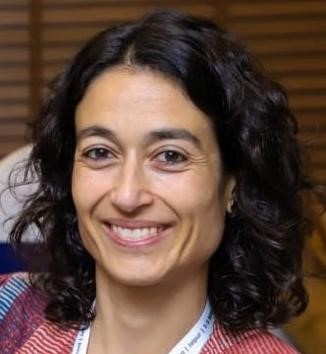
Wairimu Kagondu
Advisory Member
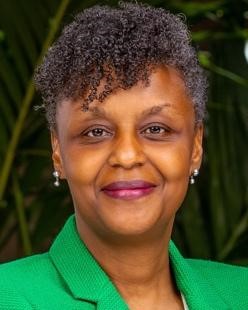
Abdisalan Noor
Advisory Member
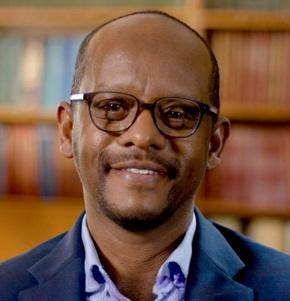
Francine Ntoumi
Advisory Member

Regina Rabinovich
Advisory Member

Richard W. Steketee
Advisory Member

Marcel Tanner
Advisory Member
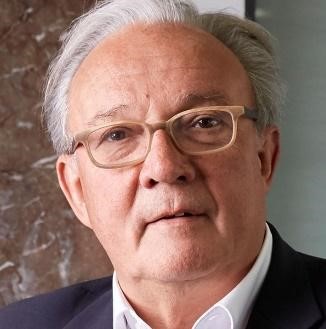
Charles Wondji
Advisory Member