Last Updated: 11/12/2017
Evaluation of targeted mass drug administration and reactive case detection around an index case on malaria transmission and elimination in Ethiopia
Objectives
This project aims to answer the following question: Will the addition of targeted mass drug administration (tMDA) or reactive case detection (RACD) conducted within a 100m radius of the index case impact community level malaria transmission in a setting of optimized malaria control interventions?
Addis Continental Institute of Public Health (AC-IPH), Ethiopia
Primary outcome:
– Incidence of malaria cases through routine surveillance data
Secondary outcomes:
– Malaria burden by antigen test, serology and PCR
– Coverage of the intervention
– Acceptability
– Prevalence of serious adverse events
– Adherence to drug regimen
– Costs and cost-effectiveness
– Sensitivity and specificity of PCR as compared to antigen-based multiplex testing
– Ratio of imported to locally acquired incident cases
ClinicalTrials.gov Identifier: NCT04241705
Study Type: Interventional (Clinical Trial)
Allocation: Cluster randomized
Intervention Model: Parallel Assignment
Masking: None (Open Label)
Primary Purpose: Prevention
Estimated Enrollment: 48960 participants
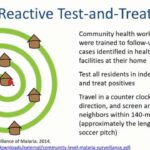
• Arm 1 – RACD: following identification of positive index cases at the health post or health center, individuals who reside within ~100m radius of the index case will receive diagnosis for malaria using RDT and if positive will receive treatment.
• Arm 2 – tMDA: following identification of positive index cases at the health post or health center, individuals who reside within ~100m radius of the index case will receive presumptive treatment.
• Arm 3 – Control.
In addition, all study arms will include optimized malaria control interventions: strengthened surveillance systems and commodities management, scale-up of vector control and case management services.
Jan 2020 — Jan 2022
$800,000
Related Resources