Last Updated: 11/11/2025
Reactive case detection with targeted mass drug administration: Interrupting malaria transmission and achieving elimination beyond intervention areas in northwestern Peru
Objectives
Main objective: To assess the effect of RCD/tMDA on malaria incidence in intervention areas of Peru.
Specific objective: To estimate the effectiveness of Reactive Case Detection (RCD) with Focal Mass Drug Administration (fMDA) as compared to passive case detection (PCD) in reducing the incidence of malaria to zero in Tumbes, Peru.
Johns Hopkins Bloomberg School of Public Health (JHBSPH), United States
Reactive case detection (RCD) with focal mass drug administration (FMDA) represent a novel and efficacious strategy for malaria elimination, although little is known about its effectiveness. In this study, we assessed the effectiveness attributable to the RCD/FMDA strategy as compared to passive case detection (PCD) in reducing the incidence of malaria to zero in Tumbes, Peru.
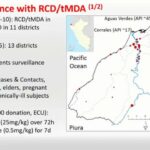
From 2009 to 2010 we piloted a malaria-elimination program based on RCD/FMDA in the two districts with high burden of malaria in Tumbes; then, from 2011 to 2014 we scaled the program up in the other 11 districts in Tumbes. Under RCD each malaria case that was passively detected was followed-up within the first 24 hours by enumerating and treating each of their household contacts, excluding pregnant women, elders (>65 years old), and chronically-ill subjects. Then every eligible subject was treated with oral chloroquine (25mg/kg, total dose) for 72 hours plus oral primaquine (0.5mg/kg) for seven days.
The primary study endpoint was a 50% reduction in the annual parasite incidence (API =total malaria cases/1,000 inhabitants) at the surveillance-reporting unit level, and the data were analyzed by the intention to treat method. The Peruvian Ministry of Health sponsored the study, and the Ecuadorian government donated 20,000 vivax malaria treatments. During the pilot study, we treated a total of 8,243 subjects, including 7,376 household contacts. The estimated reduction in the mean API across intervention reporting units was 86% (95% Confidence Interval: 72−100) at 12-months and 98% (93−100) at 24 months and the estimated reduction across non-intervention reporting units was -231% (-39−-66) at 12-45 months and -19% (-87− 49) at 24-months, respectively. The reductions in the mean API were statistically significantly higher in the intervention group at both 12-months (p =0.02) and 24-months (p =0.04) compared to baseline. These findings were verified using mixed-methods Poisson regression analysis when adjusting the RCD/FMDA effect by seasonality and climate and environmental parameters of soil moisture, surface pressure, and vegetation. Based on this multilevel multivariate analysis we observed that RCD/FMDA significantly contributed to decreasing the weekly parasite incidence (Beta= -0.53; CI 95%: -0.91, -0.15; IRR=0.59) in the intervention areas as compared to the comparison areas. After scaling up, the API throughout Tumbes dropped to 3.1 and 0.4 in the years 2011 and 2012, with zero cases found in 2013, and one imported case in the year 2014.
As a result of this, we concluded that RCD/FMDA represents an effective strategy to support malaria elimination initiatives in regions with high predominance of vivax malaria, strong but limited connectivity between communities, with a long track record using primaquine as is found in northwestern Peru and the Peruvian Amazon.
- Type: Community trial
- Allocation: Non- randomized
- Intervention model: Parallel
- Masking: None (open label)
- Primary purpose: To assess effectiveness
Jan 2011 — Dec 2015
Related Resources