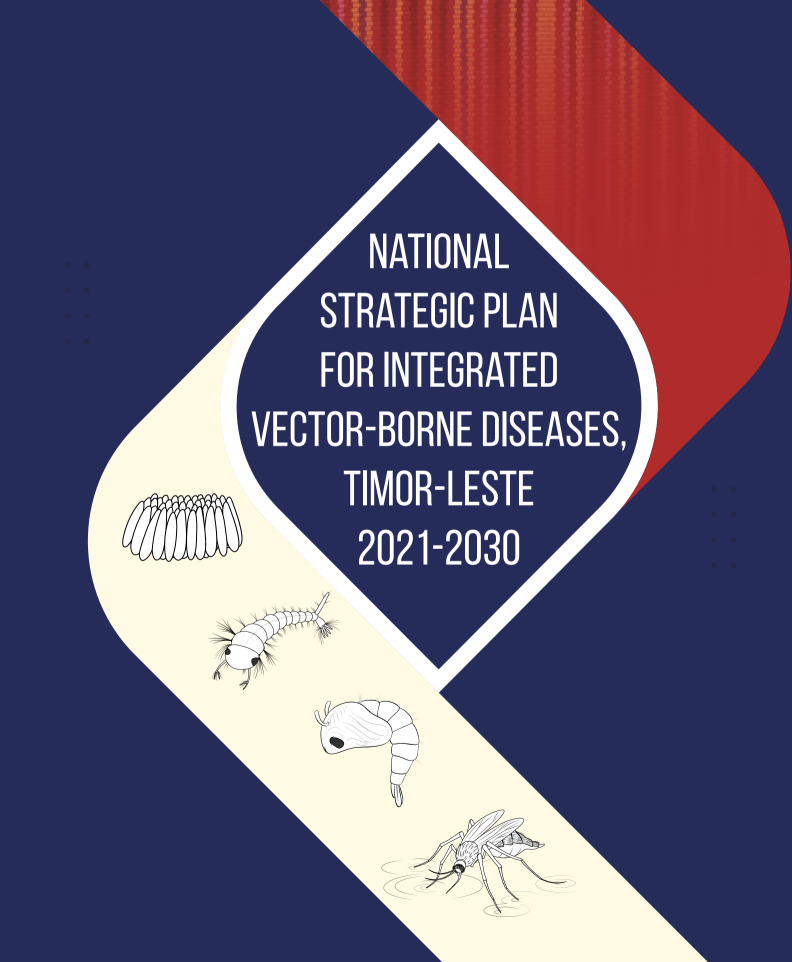
National strategic plan for Integrated Vector-Borne Diseases (VBDs) of Timor-Leste: 2021-2030
Countries: Timor-Leste
Published: 01/07/2022
The National strategic plan for Integrated Vector-Borne Diseases (VBDs) of Timor-Leste 2021-2030 combines a malaria prevention and dengue control perspective. Malaria, dengue, and lymphatic filariasis (LF) are the primary vector-borne diseases (VBDs) in Timor-Leste. According to available data, there has been a reduction in the number of malaria cases. However, eliminating the disease completely has proven to be a challenge. Despite making tremendous progress, the last mile remains difficult to cover.
Vision: Malaria and LF-free and effectively control dengue in Timor-Leste
Mission:
- To plan and implement comprehensive anti-malarial services through a dedicated and skilled workforce in collaboration with all stakeholders by ensuring sustainable, efficient, and quality interventions to malaria-free status and LF in the country by 2025 and further sustainability by 2030.
- To effectively control dengue with improved diagnosis, case management, and integrated vector management with the engagement of the community and all stakeholders under the overall umbrella of Integrated Vector-Borne Disease Control strategy in sync with malaria elimination.
Goals:
Malaria: In line with the Global Malaria Elimination by 2030, the goals for all municipalities attaining malaria-free status are:
- Maintain malaria-zero indigenous cases throughout the country by 2025 and sustain until 2030.
- Prevent the re-establishment of malaria in the state.
Dengue: In lines with the neighbouring countries
- Improved diagnosis, case management and reduce CFR.
Objectives:
The country has following objectives:
- Reduction in morbidity and mortality due to dengue and its sustenance.
- No indigenous transmission
Published: 01/07/2022
Related Resources