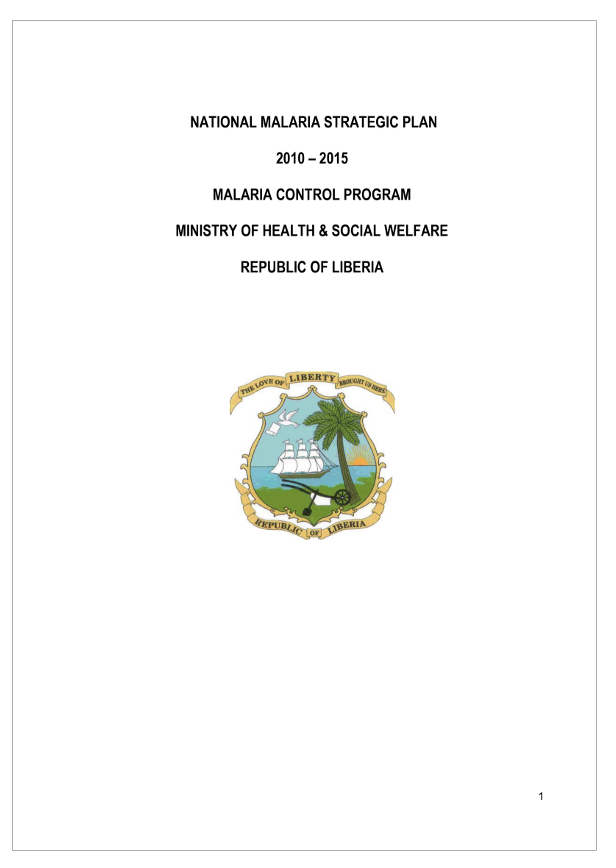
National Malaria Strategic Plan (NMSP) of Liberia: 2010 – 2015
Countries: Liberia
Published: 01/01/2010
Note: A more recent NMSP is available. View it here (link).
This third Liberia National Malaria Strategic Plan for 2010 – 2015 addresses the need to scale-up malaria control and prevention activities to achieve the Roll Back Malaria (RBM) target of reducing malaria morbidity and mortality by half by 2010, as well as the Millennium Development Goals (MDG) of sustaining this progress and beginning to reverse the incidence of malaria by 2015. The third Strategic Plan addresses any gaps observed in the implementation of the First and Interim Strategic Plans and also puts forth a more detailed and well-assessed strategy in dealing with the malaria situation in Liberia by these target dates.
Vision: A healthier Liberia with universal access to high quality malaria control and preventive services.
Mission Statement: Providing comprehensive, accessible and affordable quality malaria control and prevention services, focusing on the reduction of malaria burden in the population, especially among the poor and vulnerable groups including pregnant women and children under five years old.
Goal: To reduce malaria related morbidity and mortality among the population, especially in children under five and pregnant women
General objective: To reduce morbidity and mortality due to malaria by 50% of baseline by 31st December 2010 and to halt and begin to reverse the incidence by 2015.
Specific objectives:
- To increase access to prompt and effective ACT treatment for 80% of the population by 31st December 2010 and sustain this reduction through 2015;
- To increase the use of Intermittent Preventive Treatment (IPT) among pregnant women in Liberia to 80% by 31st December 2010 and sustain this use through 2015
- To increase the use of Insecticide Treated Nets (LLIN) among the whole population, especially vulnerable populations such as pregnant women and children under five, to 80% by 31st December 2010 and sustain this use through 2015;
- To increase the population protected by indoor residual spraying (IRS) from 5% in 2009 to 40% in 2010 and 2011 and scaling up to full coverage by 2015 after evaluation of the first three years of use.
Published: 01/01/2010
Related Resources