National Malaria Strategic Plan (NMSP) of Eswatini: 2008 – 2015
Countries: Eswatini
Published: 07/07/2008
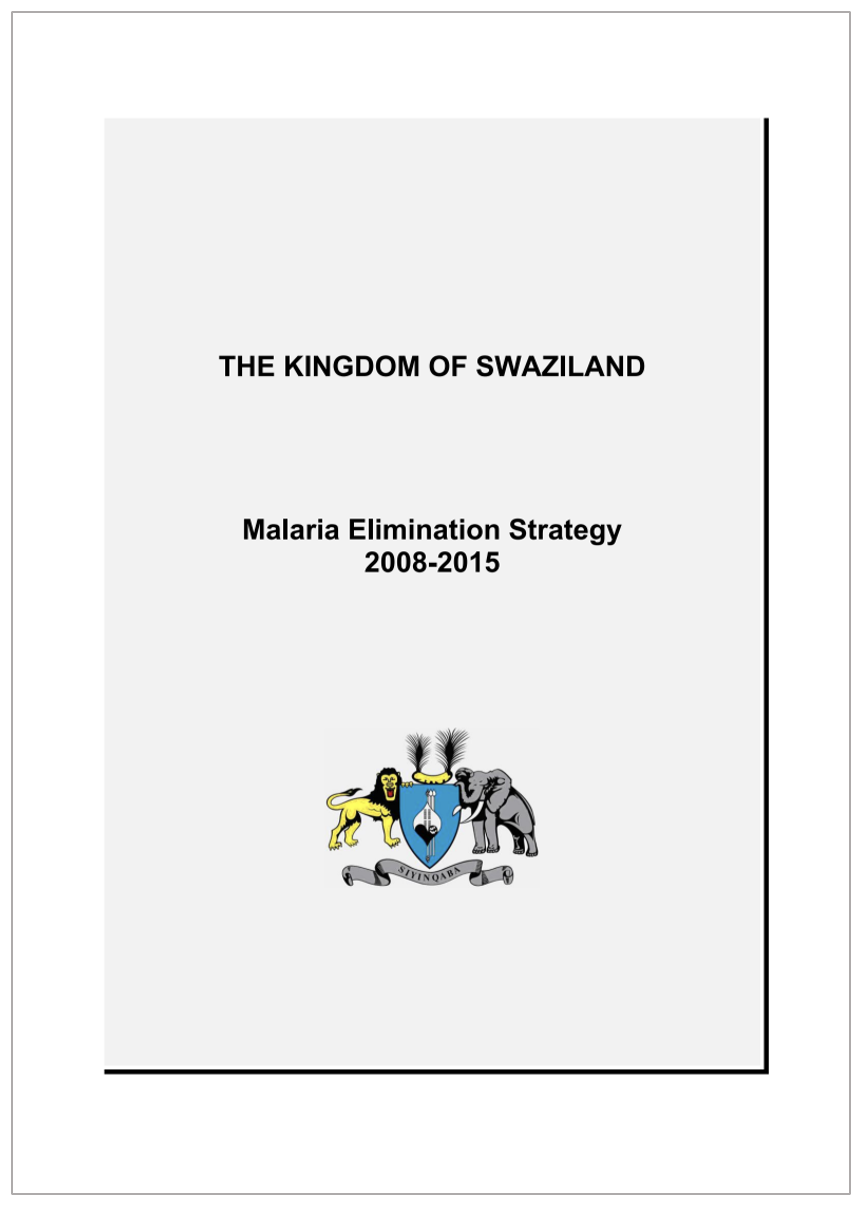
This Malaria Elimination Strategy 2008-2015 aims to define the key goals, objectives and strategies for malaria elimination in Swaziland (now Eswatini) and follows the WHO’s continuum of the key programmatic phases for malaria elimination (i.e., control, pre-elimination, elimination and prevention of re-introduction).
Goal: The goal of Swaziland’s (now Eswatini) malaria elimination strategy is to achieve malaria elimination by 2015 in the country.
Objectives: The key objectives of the strategy are to:-
- Reduce and sustain the locally acquired malaria cases to zero by 2015;
- Reduce and sustain malaria deaths seen at health facilities to zero by 2015
and - Maintain zero locally acquired malaria cases by prevention of reintroduction for all years following 2015.
Strategies: The key intervention strategies for achieving the malaria elimination goal for Swaziland (now Eswatini) are:- case management; vector control; surveillance and epidemic preparedness and response (EPR); and health promotion and information, education, and communication (IEC).
Targets: The key targets for implementation of the strategies are as follows:-
- All malaria cases are diagnosed by Rapid Diagnostic Tests (RDTs) and confirmed by slide microscopy by 2015; sustainment of these targets from 2015 onwards;
- All of the diagnosed malaria cases are treated with ACTs by 2015 and subsequent years;
- All of the malaria affected population are protected by IRS;
- Insecticide-Treated Nets (ITS) are distributed to all households (1 per every 2 persons) targeted in the malaria transmission areas;
- All malaria epidemics are identified and responded to within 2 weeks of onset and sustained beyond 2015; and
- The total population of the country is reached by IEC by 2015.
To ensure successful implementation of the key interventions for this elimination strategy, health system and programmatic support for malaria elimination should be strengthened. These activities include:
- Recruiting and training human resources at all levels;
- Procuring appropriate equipment;
- Developing and strengthening infrastructure;
- Creating and strengthening partnerships to scale up implementation and
- Setting up and strengthening monitoring & evaluation systems to track progress on Swaziland Malaria Elimination Strategy.
Published: 07/07/2008
Related Resources