National Malaria Strategic Plan (NMSP) of Central African Republic: 2018 – 2022
Source(s):
Ministry of Health and Population (MoHP) Central African Republic, Central African Republic
Countries: Central African Republic
Published: 01/01/2018
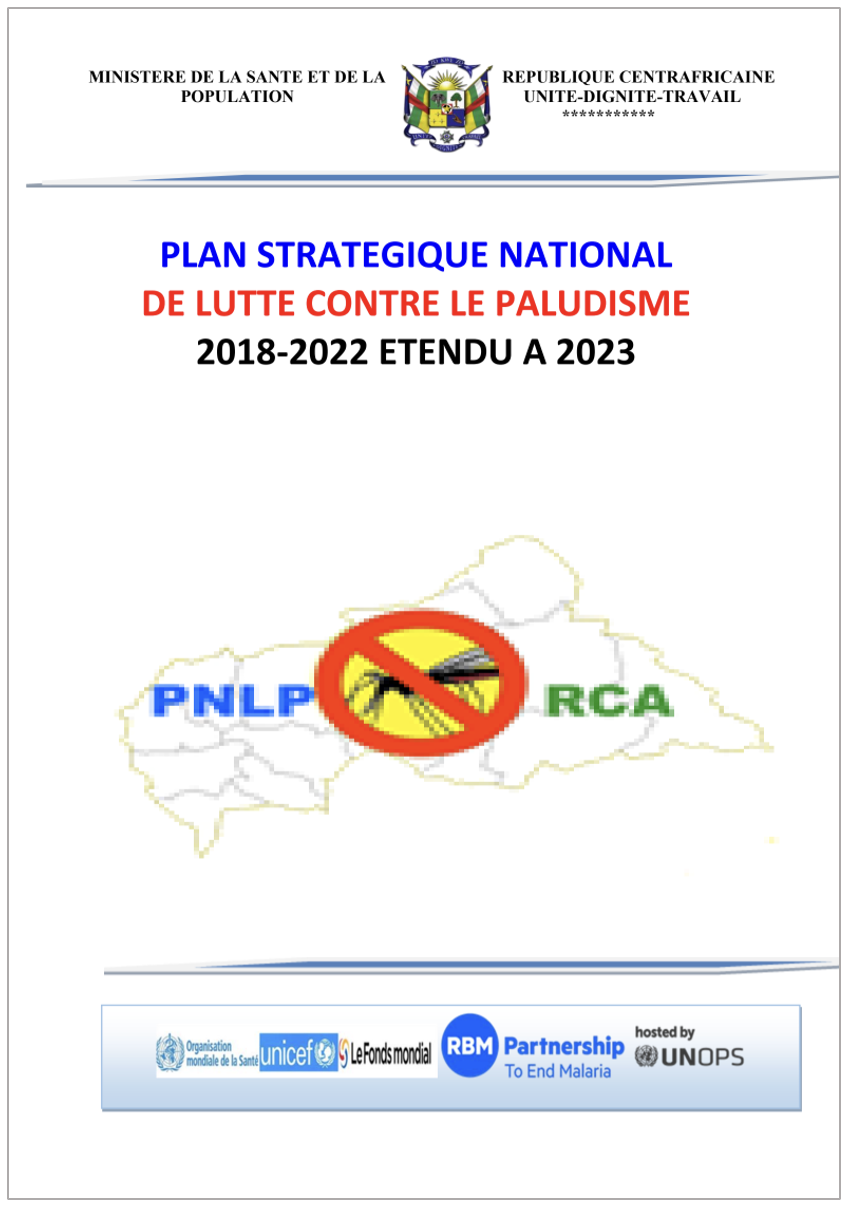
The Plan Stratégique National de Lutte contre le Paludisme (PSNLP) 2018-2022 Etendu a 2023 aims to contribute to reducing malaria-related morbidity and mortality, with the ultimate goal of moving towards the elimination of the disease.
Objectives: the objectives for the 2018–2022 period (extended to 2023) are as follows:
- Protect at least 80% of the at-risk population with effective vector control interventions by the end of 2023;
- Ensure chemoprevention coverage for at least 80% of pregnant women and children under five years of age by the end of 2023;
- Ensure appropriate management of at least 80% of malaria cases in accordance with national guidelines by the end of 2023;
- Ensure the availability of quality antimalarial medicines and other supplies in at least 95% of functional health facilities (public, private, and faith-based);
- Ensure the availability of quality antimalarial medicines and other supplies with at least 100% of participating community health workers by the end of 2023, including contingency stocks for complex emergencies and epidemics.
- Ensure that at least 80% of the population adopts behaviors conducive to malaria control by the end of 2023.
- Improve the performance of the malaria surveillance system—including the monitoring and evaluation system (raising timeliness from 46% to at least 80% and completeness from 66% to 95%)—as well as operational research by the end of 2023.
- Strengthen the program’s institutional and operational management capacities to increase the implementation rate of National Strategic Plan (NSP) activities from 36% in 2017 to at least 90% by the end of 2023.
Strategic areas: National Strategic Plan for Malaria Control 2018–2022 (extended to 2023)
Activities are planned around 24 interventions developed under the following 7 strategic areas:-
- Strategy 1: Vector control
- Strategy 2: Chemoprevention
- Strategy 3: Case management
- Strategy 4: Supply and stock management
- Strategy 5: Health promotion
- Strategy 6: Surveillance, monitoring, and evaluation
- Strategy 7: Program management
Language
French
External reference
Published: 01/01/2018
Language
French
Related Resources