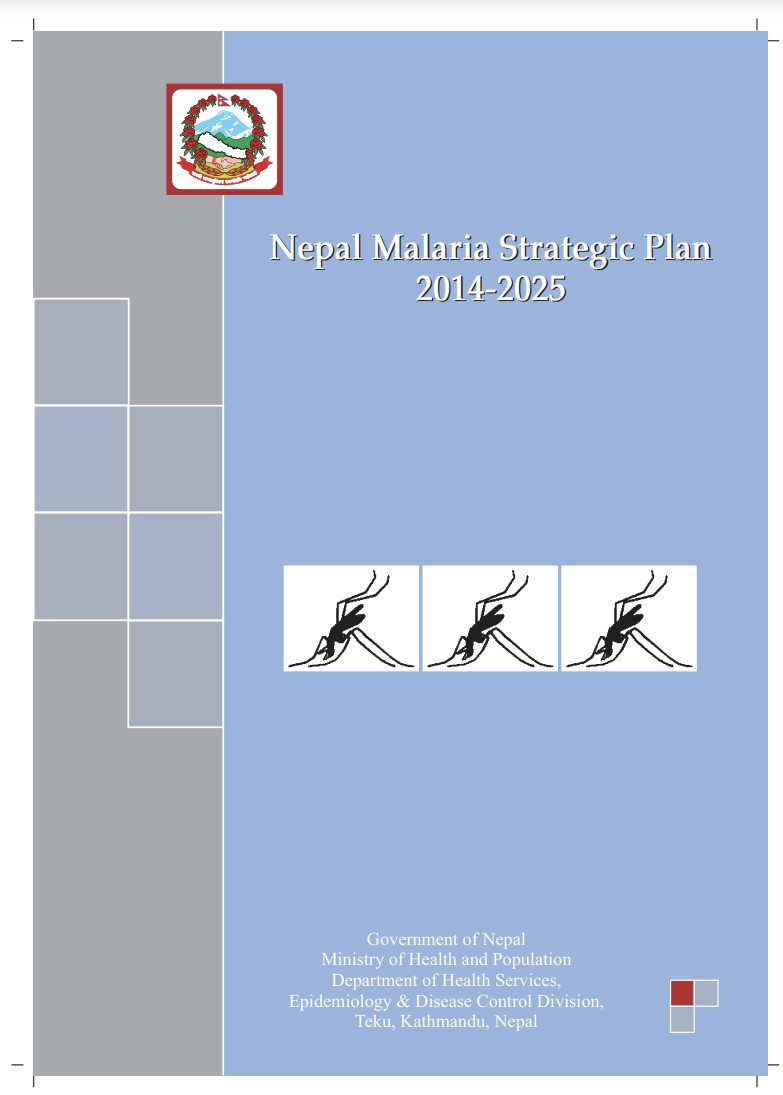
National Malaria Strategic Plan (NMSP) of Nepal: 2014 – 2025
Countries: Nepal
Published: 15/07/2014
Malaria continues to be a public health priority in Nepal with a national aim of a malaria-free Nepal by 2026. The country has surpassed targets set by the Millennium Development Goals and is positioned to eliminate indigenous malaria transmission. The modified malaria strategic plan 2014-2025 presented here takes into consideration the results of microstratification of malaria risk areas-2012, the midterm program review 2013, the current epidemiology and updated WHO guidelines, particularly for vector control and insecticide resistance management. This plan has inherent Government of Nepal’s commitment and seeks appraisal of external development partners, including the Global Fund, for possible external funding and technical assistance.
The Ministry of Health and Population, through its National Malaria Control Program, has set ambitious vision of a malaria-free Nepal by 2026. Over the next 5 years (2014-2018), our priority will be to consolidate the gains achieved till date in reducing the malaria burden and sustain the downward trend in malaria morbidity and mortality and maintain outbreak free status.
The plan aims at achieving zero deaths due to malaria by 2015 and sustain it thereafter, reducing the incidence of indigenous malaria cases by 90%, and number of Village Development Committees (VDCs) having indigenous malaria cases by 70% of current levels by 2018.
Strategic objectives:
- to strengthen strategic information for decision making towards malaria elimination
- to further reduce malaria transmission and eliminate the foci wherever feasible
- to improve quality of and access to early diagnosis and effective treatment of malaria
- through advocacy and communication, sustain support from the political leadership and the communities towards malaria elimination
- to strengthen programmatic technical and managerial capacities towards malaria elimination.
Published: 15/07/2014
Related Resources