Last Updated: 26/05/2026
The MalariaGen Vector Observatory
Objectives
The main goal of this project is to build an open-access resource of Anopheles genome sequence data, including Southeast Asian malaria vector species.
Specific objectives:
- Sequence approx 30,000 mosquitoes over 5 years
- Study other Anopheles gambiae complex members (esp. An arabiensis)
- Study An funestus
- Study Southeast Asian malaria vectors
- Increase geographical coverage in Africa
- Regular sampling through time
- Sequence before, during and after vector control interventions
- Develop ultra-low cost molecular diagnostics that could be run in local or regional labs
MalariaGEN Resource Centre, Sanger Institute, United Kingdom
The Malaria Vector Genome Observatory is a collaborative effort to sequence the genomes of thousands of Anopheles mosquitoes and use those data to improve malaria control. We focus on those species that act as human malaria vectors.
It is made up of several projects, each focused on different areas of vector mosquito genomics. All of the projects generate accessible, high-throughput data, as well as tools and training that support malaria researchers and public health data analysts.
- ANOSPP (ANOpheles SPecies Plasmodium) – Targeted sequencing to identify Anopheles species and Plasmodium carriers
- Anopheles gambiae genomic surveillance – Whole-genome sequencing for surveillance of mosquitoes in the An. gambiae species complex
- Anopheles funestus genomic surveillance – Whole-genome sequencing for surveillance of An. funestus mosquitoes
- Anopheles darlingi genomic surveillance – Whole-genome sequencing for surveillance of An. darlingi mosquitoes
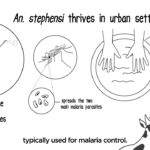
- Anopheles stephensi genomic surveillance – Whole-genome sequencing for surveillance of An. stephensi mosquitoes
- Vector Observatory – Asia – Whole-genome sequencing to investigate the population structure and diversity of malaria vectors in Asia
Jan 2017
Related Resources