National Malaria Strategic Plan (NMSP) of Vanuatu: 2021 – 2026
Countries: Vanuatu
Published: 15/06/2020
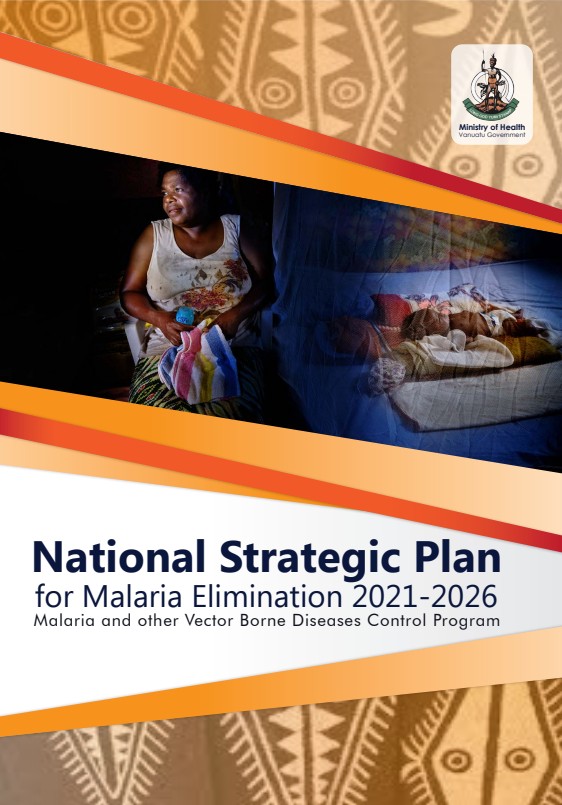
The National Strategic Plan for Malaria Elimination 2021–2026 outlines Vanuatu’s national strategy to achieve malaria elimination through a phased and targeted approach. It considers the findings and recommendations of a comprehensive Malaria Program Review conducted in 2018 and extensive follow-up action, health system and financing analysis, impact modelling, and deliberations by the national Malaria and Other Vector Borne Diseases Control Program and Provincial Health Managers, with the support of WHO and other key partners.
Vision: A malaria free Vanuatu, contributing to the good health and well-being of the population.
Goals:
- Prevent re-establishment of transmission in all provinces where transmission has been
interrupted. - Achieve zero indigenous malaria cases in all provinces of Vanuatu by the end of 2023.
- Receive World Health Organization (WHO) certification of malaria-free status in 2026.
Strategic Objectives (Key Interventions):
- To maintain very high levels of coverage with long-lasting insecticidal mosquito nets (LLIN); and to rapidly reduce malaria transmission in selected higher-incidence areas and foci using indoor residual spraying (IRS).
- To roll out case-based surveillance and response nationwide using the ‘1-7-60’ approach.
- To test all fever cases for malaria by rapid diagnostic test (RDT) or microscopy, and provide prompt radical treatment and care for all confirmed cases according to the national Malaria Diagnosis and Treatment Guidelines.
- To mobilize communities through health promotion and leverage the support of all stakeholders in a multi-sectoral effort to accelerate the elimination of malaria.
- To ensure that malaria and other VBD prevention, surveillance and case management are well integrated into disaster preparedness and response activities.
Strategic Objectives (Supporting Elements):
- To maintain a high level of political commitment to malaria elimination; and to strengthen program management at national level and implementation at provincial and local levels through improved mechanisms for workforce management, program planning, disbursement of funds, information and data management, technical assistance and cooperation, procurement and supply chain management, and performance monitoring.
- To leverage technical partnerships in support of innovation by generating new knowledge and applying it to improve delivery and quality of malaria services.
Published: 15/06/2020
Related Resources