

Gates Foundation Call for Applications: Grand Challenges – Innovations in Cost-Disruptive Tools for Diagnosis and Screening
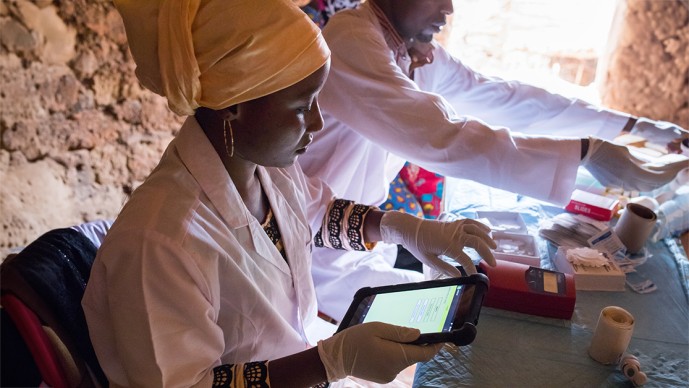
The Gates Foundation is calling for applications for its Grand Challenges – Innovations in Cost-Disruptive Tools for Diagnosis and Screening.
This Grand Challenge seeks cost-disruptive tools for diagnosis and screening, defined as devices that amortize capital to near-zero incremental cost and consumable $1-class tests that materially reset the cost curve in LMICs while meeting real-world deployment constraints. For screening applications cost targets should be interpreted per person screened; for diagnostic or monitoring applications, per test performed.
This initiative aims to turn these concepts into scalable solutions across high-priority disease areas: Tuberculosis, HIV, Malaria, STIs, Maternal and newborn Health, Anemia and women’s health, Nutrition surveillance and fortified-food monitoring, Enteric disease, Neglected Tropical Diseases, Emerging pathogens and syndromic testing, Manufacturing innovations.
These innovations should be transformative, high-risk, high-reward and fundamentally rethink how diagnosis or screening is performed, including novel sensing modalities, software-defined diagnostics, and AI-enabled or software-only approaches that materially change performance, cost structure, or deployment models.
Eligibility:
- Nonprofit organizations, for-profit companies, international organizations, government agencies, and academic institutions.
- Applications from institutions based in LMICs and projects led by women are encouraged.
Proposals should:
- Clearly articulate the relevant LMIC disease focus area and intended use case, especially where disease-specific validation does not yet exist.
- Describe operational feasibility for LMIC settings including explicit attention to high-throughput screening workflows, where applicable.
- Include a feasible workplan and milestones appropriate to the maturity of the technology.
- Provide clear evidence to justify the requested funding level.
- Present a credible pathway to population-scale economics (approximately US$1 or near-zero incremental cost), including key assumptions. For platform-based solutions, describe how multiple use cases can improve economics and sustainability.
- Commit to independent evaluation participation and appropriate ethical, regulatory, and Foundation open access policy.
Funding and duration:
- Option A: Smaller proof-of-concept awards (up to five awards of approximately US$300,000, for each selected project, with a grant term of up to 24 months) to support early feasibility and prototyping, inclusive of technically risky, out-of-the-box concepts
- Option B: Mid-level awards (up to three awards of approximatelyUS$500,000 for each selected project, with a grant term of up to 24 months) to support product refinement and early validation
- Option C: Larger awards (up to two awards of approximately US$1,000,000, for each selected project, with a grant term ofup to 36 months) to support mature platforms or advanced adaptation toward verification and field readiness, with commensurate evidence of technical readiness, feasibility, and a clear pathway to validation.
Applicants should request funding aligned with the scope and maturity of their proposed work and include a clear milestone plan proportionate to the support requested.
Read here for more information.
Application deadline, 28 April 2026 11:30 am PDT
