

Association of African Universities Call for Expression of Interest: Understanding African universities’ capacity for climate adaptation research
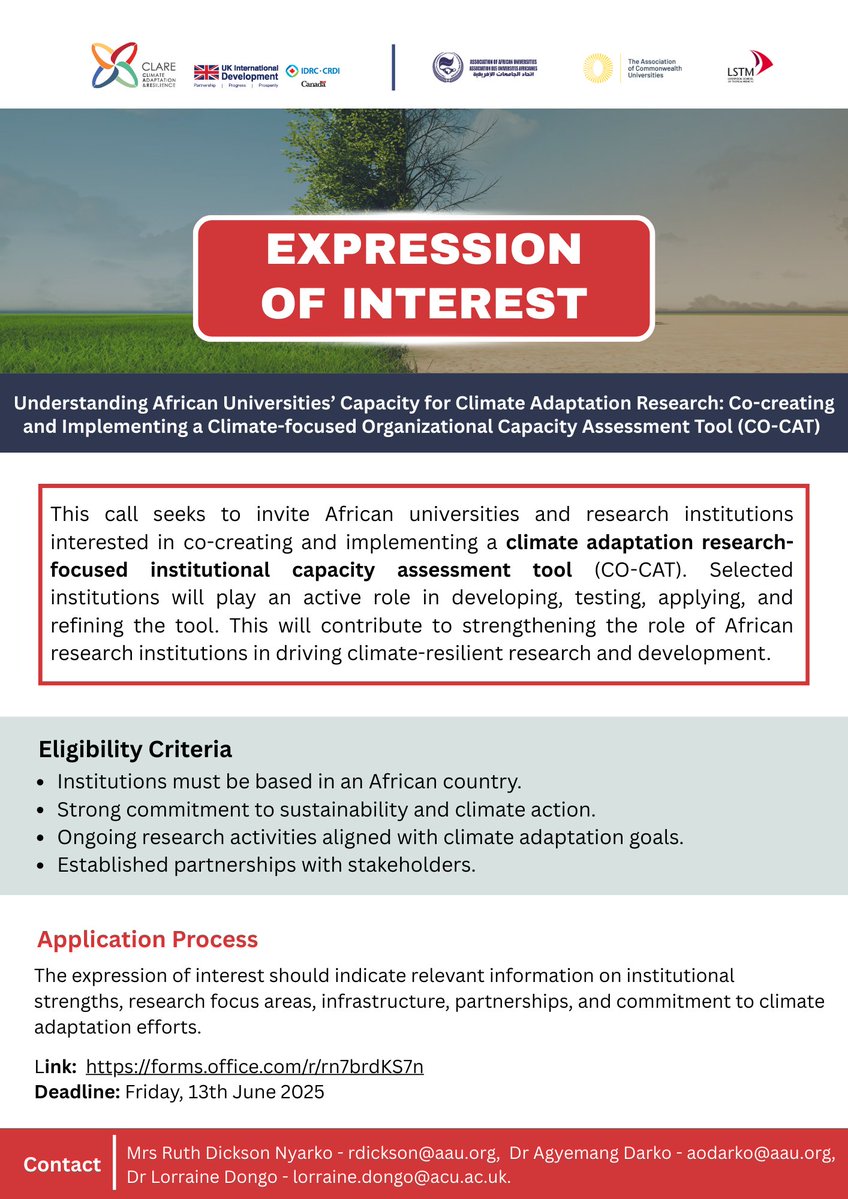
The Association of African Universities (AAU) is calling for expressions of Interest on “Understanding African universities’ capacity for climate adaptation research: Co-creating and implementing a climate-focused organizational capacity assessment tool (CO-CAT)”.
This call for expression of interest seeks to invite African universities and research institutions interested in joining a 24-month initiative to co-create and implement a climate adaptation research-focused institutional capacity assessment tool (Co-CAT). Selected institutions will play an active role in developing, testing, applying, and refining the tool. This will contribute to strengthening the role of African research institutions in driving climate-resilient research and development. The expression of interest should indicate relevant information on institutional strengths, research focus areas, infrastructure, partnerships, and commitment to climate adaptation efforts.
Eligibility Criteria:
Research institutions and universities must meet the following criteria:
- Institutions must be based in one of the following countries: Algeria, Egypt, Morocco, Tunisia, Côte d’Ivoire, Senegal, Ghana, Nigeria, Cameroon, Benin, Togo, Central African Republic, RDC, Gabon, Burundi, Kenya, Ethiopia, Tanzania, Uganda, Namibia, Zambia, and Botswana.
- Institutional Commitment: Participating universities must demonstrate a strong institutional commitment to sustainability and climate action through established strategies and policies. They should express their active involvement in global or continental initiatives for climate action with clear leadership support and willingness to engage in the proposed project.
- Research Alignment: Institutions should have ongoing research activities that align with national or continental climate adaptation goals. This includes having dedicated research centres, programs, or experts in climate or environmental science, environmental sustainability, or related fields, with the capacity to contribute to evidence-based policymaking.
- Partnerships and Collaboration: A strong record of collaboration is essential. Universities and research institutions must have existing partnerships with international academic institutions, NGOs, governments, the private sector, or local communities. Active involvement in multi-stakeholder initiatives and the ability to engage in collaborative knowledge exchange will be highly valued.
- Infrastructure and Technology: Participating institutions should possess reliable ICT infrastructure that supports online collaboration and data sharing.
- Credibility and Ethics: Universities must show a credible track record in publishing climate-related research in reputable journals and demonstrate access to internal or external funding for climate research. Ethical research practices and a commitment to transparency and integrity are non-negotiable.
Benefits:
- An opportunity to engage with a broader community of more than 300 climate adaptation research contributors and organizations across Africa associated with the Climate Change Adaptation Research (CLARE) project across Africa.
- An opportunity to engage diverse stakeholders in climate change adaptation research
- Through this project, it is anticipated that institutions will be responsible for common issues identification and proffering of solutions.
- A seed grant of USD 5,000 will be awarded to selected institutions involved to pilot and contributing to refining the Co-CAT tool.
- Other benefits include the opportunity for learning activities, training, workshops and exposure to virtual living lab environments and toolkits.
Read more here.
Submission deadline, June 13, 2025.
