

APMEN World Mosquito Day Webinar: What is the Future of Mosquito Vector Control?
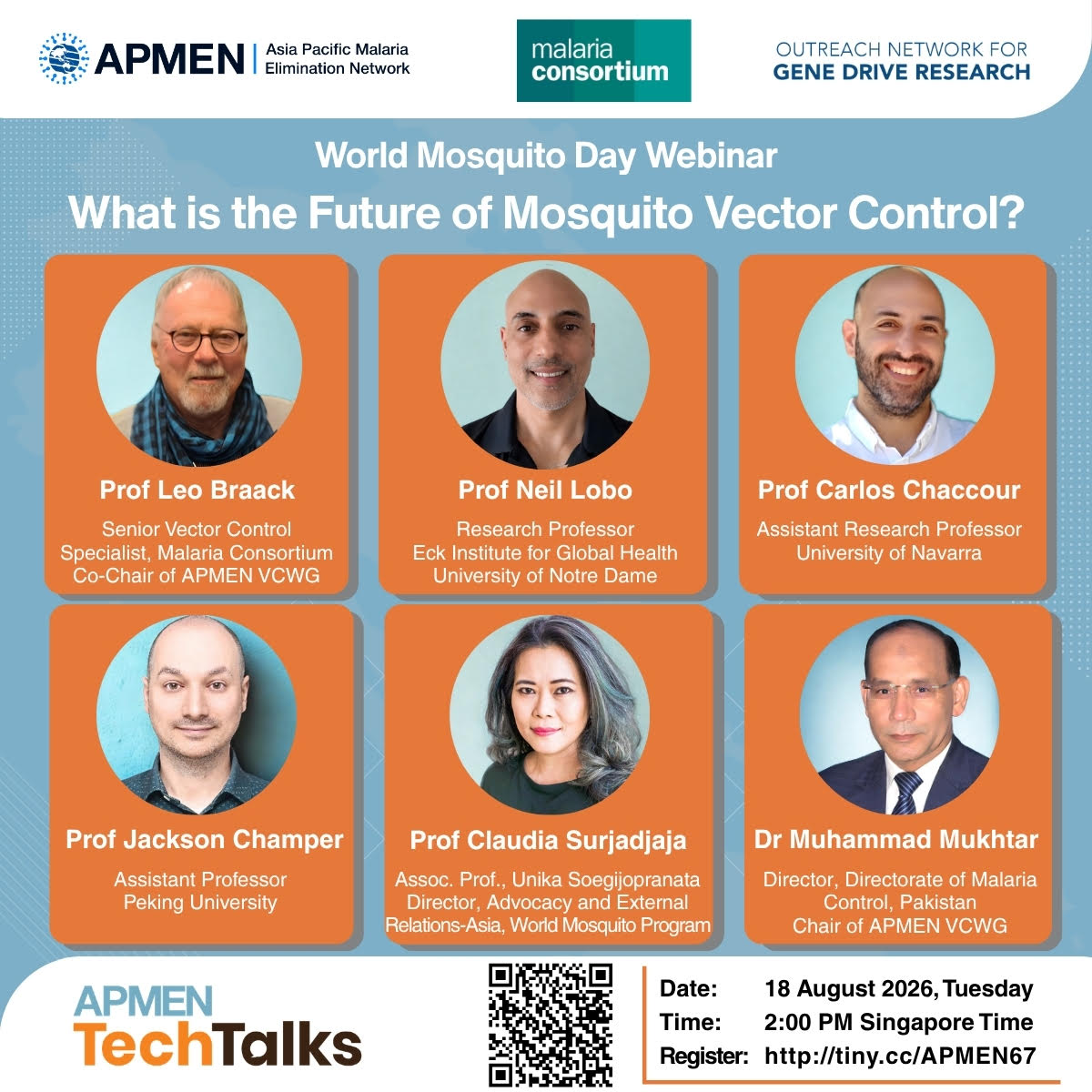
To commemorate World Mosquito Day 2026, the APMEN TechTalks Webinar, co-hosted by the APMEN Vector Control Working Group, the Outreach Network for Gene Drive Research, and Malaria Consortium, is pleased to invite you to an upcoming webinar: What is the Future of Mosquito Vector Control?
For malaria burden reduction, vector control is overwhelmingly the single most effective intervention. It has been estimated that in Africa (where >90% of global cases occur) over the preceding two decades more than 80% of malaria cases averted have been due to the provision of Insecticide Treated Nets and Indoor Residual Spraying. To reduce dengue risk, vector control is also the primary tool. However, insecticide resistance within target mosquito populations, inadequate uptake of available interventions, and other factors have resulted in a ceiling of vector control impact and an escalation of mosquito-borne disease, notably malaria and dengue. This is particularly true for outdoor transmission. While vaccines and other interventions hold promise for incisive future disease burden reduction, there is a clear need to strengthen vector control to regain medium-term control of transmission. This webinar will explore some of the new and upcoming approaches for enhanced vector control.
Click here to register
