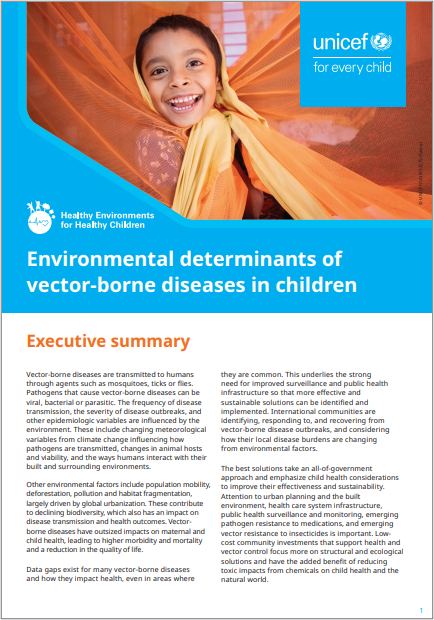
Environmental determinants of vector-borne diseases in children
Published: 17/07/2026
This report examines how environmental factors, including climate change, urbanization, and changes to natural and built environments, influence the transmission and spread of vector-borne diseases affecting children. It highlights how diseases transmitted by mosquitoes, ticks, and other vectors are shaped by shifting environmental conditions, while emphasizing significant gaps in disease surveillance and health data that hinder effective prevention and response.
The report calls for strengthened public health systems, improved monitoring, and coordinated, cross-sectoral action that prioritizes child health. It also advocates for sustainable, community-based approaches to vector control, including better urban planning, resilient health infrastructure, and ecological interventions that reduce reliance on chemical insecticides while protecting both children’s health and the environment.
Published: 17/07/2026
THEMES: Climate Change | Urban Malaria | Vector Control | Vulnerable Populations
Related Resources