Entomological Surveillance Planning Tool (ESPT)
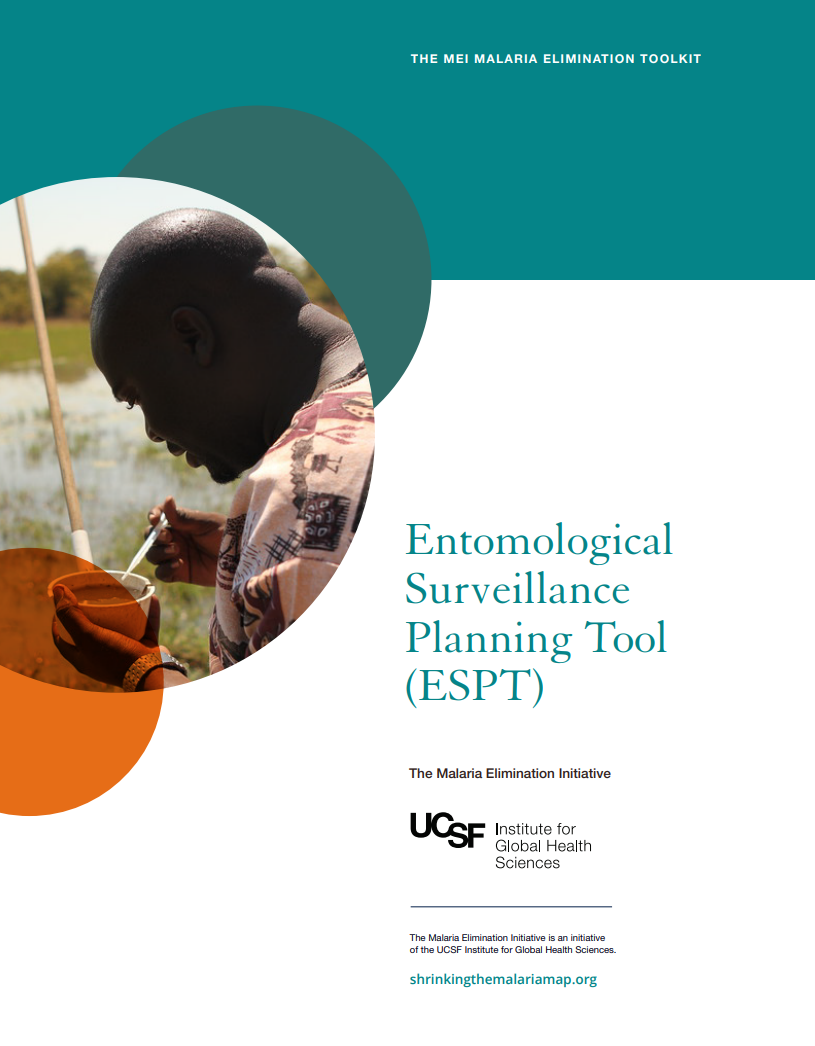
The ESPT is a decision-support tool for planning entomological surveillance activities, interpreting entomological data, and guiding programmatic vector control decisions. The ESPT prioritizes entomological surveillance indicators and activities across transmission settings, geographic areas (sentinel sites versus transmission foci), and levels of program capacity.
The ESPT includes practical approaches and priority indicators (i.e., minimum essential indicators) to help answer program questions about local transmission drivers, gaps in protection with current vector control interventions (e.g. insecticide resistance, outdoor biting, etc.), and selecting supplemental vector control interventions to address gaps in protection. In turn, these data, in combination with epidemiological and other data, help programs tailor vector control solutions, reduce vector populations and human-vector contact, and drive down transmission. The ESPT also includes indicators and methods to improve understanding of human behavior as it relates to increased exposure to infectious mosquito bites, and to high risk populations (HRPs) that may be contributing to transmission but not accessing malaria preventative and treatment services. Such indicators and methods are also considered alongside relative costs of entomological surveillance activities.
The ESPT tool is available as a PDF document in English, French, Portuguese, Spanish, and Farsi or as an interactive application for personal computers called the “little” eSPT. The eSPT software features a user-friendly design, engaging educational content, walkthrough videos, interactive decision-trees, and much more. After completing all the steps, the software generates a draft entomological surveillance plan as a Word document containing all inputs. Users can edit the document as appropriate, adding logos, extra text, or figures to tailor the document to their specific use case. The software is currently available in English and Portuguese, and additional languages are in development.
Related Resources