Last Updated: 27/11/2025
Stimulating the host innate immune response to fight the early stages of malaria infection
Objectives
*Original title and text were machine translated from Japanese
This project explores a novel method for malaria protection and treatment by stimulating the host’s innate immune response with a Toll-Like Receptor-2 (TLR2) agonist, S-[2,3-bis(palmitoyloxy)propyl] cysteine (Pam2Cys).
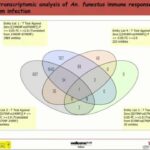
A new approach to both protection from and treatment of malaria parasites was investigated that involves the direct stimulation of the host innate immune response through the administration of a Toll-Like Receptor-2 (TLR2) agonist. The activity of S-[2,3-bis(palmitoyloxy)propyl] cysteine (Pam2Cys) against the hepatocytic stages, erythrocytic stages and gametocytes of Plasmodium yoelii was investigated. PEG-Pam2Cys significantly reduces the numbers of malaria parasites in the livers of mice following challenge with sporozoites. It also showed that the treatment can clear parasites from the liver when administered subsequent to the establishment of infection. PEG-Pam2Cys can reduce the numbers of mosquitoes that are infected following blood feeding on gametocytaemic mice. These results suggest that this compound could represent a novel liver stage anti-malarial that can be used both for the clearance of parasites following exposure and for the prevention of the establishment of infection.
Apr 2016 — Mar 2018
$37,595
Related Resources