Last Updated: 17/12/2024
An innovative tool for moving malaria PCR detection of parasite reservoir into the field
Objectives
To assess the operational performance of a diagnostic set-up based on an “in-house” designed mobile laboratory, in order to prove that malaria molecular testing and subsequent treatment is logistically achievable in field settings.
Institut Pasteur of Cambodia (IPC)
Institute of Tropical Medicine (ITM) Antwerp, Belgium
National Center for Parasitology, Entomology and Malaria Control (CNM) Cambodia
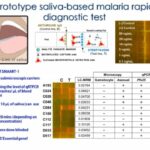
To achieve the goal of malaria elimination in low transmission areas such as in Cambodia, new, inexpensive, high-throughput diagnostic tools for identifying very low parasite densities in asymptomatic carriers are required. This will enable a switch from passive to active malaria case detection in the field.
In the present study, DNA extraction and PCR technologies were implemented in a mobile laboratory allowing a robust, sensitive and rapid malaria diagnostic strategy into the field. This innovative approach was assessed in the context of MalaResT project (NCT01663831).
The real-time PCR screening and Plasmodium species identification assays were performed in the mobile laboratory between October and November 2012, in Rattanakiri Province. Approximately 5,000 individuals were screened in less than four weeks and parasite carriers were treated within 24–48 hours after sample collection.
Oct 2012 — Nov 2012
Related Resources