Last Updated: 26/11/2025
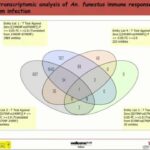
Anopheles-Plasmodium interactions: mosquito immune response and parasite immune evasion strategies
Objectives
The main aim of this study is to understand how mosquito immune responses are triggered by malaria parasites and how some parasites manage to evade these defenses.
Malaria is an infectious disease transmitted between humans through mosquito bites. The malaria parasites are ingested by female mosquitoes when they bite an infected person, and after two weeks of incubation, they are transmitted to another person. During the initial 32 hours inside the mosquito, the majority of parasites are eliminated by strong mosquito immune reactions, but few of them survive to continue the transmission cycle. This study focuses on an immune reaction that is equivalent to human complement and responsible for over 80% of the observed parasite killing and on molecules present on the parasite surface that appear to prevent activation of this reaction. This research not only would provide an advanced understanding of the mosquito immune system and the critical biological processes taking place during the early stages of parasite infection but could also aid future research for development of interventions to stop transmission of the disease.
Oct 2015 — Dec 2021
$1.96M
Related Resources