Last Updated: 13/10/2025
A Multi-stage Malaria Vaccine for Control and Elimination
Objectives
Through innovative trial designs and strategic capacity-building, the investigators aim to advance EDCTP3 objectives by:
- Establishing the safety and efficacy of a multi-stage vaccine that reduces transmission;
- Pursuing accelerated regulatory approval of Pfs230D1+R21;
- Expanding population-level, long-term safety and efficacy data on R21; and
- Generating critical expertise and data to support cGMP production and strengthen the vaccine supply chain across Africa.
The proposed program will enhance clinical trial capacity for transmission-blocking interventions, foster regional expertise, and generate robust evidence to guide future vaccine manufacturing within Africa. Moreover, it will deepen scientific understanding of malaria immunity, particularly the correlates of protection. By the conclusion of the project, an approved multi-stage malaria vaccine designed to reduce transmission will be positioned for Phase 4 cluster-randomized trials, marking a significant step toward malaria elimination.
Serum Institute of India
University of Ghana (UG)
Health Action Research Group (GRAS), Burkina Faso
Imperial College London, United Kingdom
University of Sciences Techniques and Technologies of Bamako (USTTB), Mali
National Institute of Allergy and Infectious Diseases (NIAID), National Institutes of Health (NIH), United States
Ifakara Health Institute (IHI), Tanzania
Clinical Research Institute of Benin (IRCB)
University of Oxford, United Kingdom
Centers for Disease Control and Prevention (CDC), United States
Research Institute for Development (IRD), France
Kenya Medical Research Institute (KEMRI)
This proposal responds to the HORIZON 2024 call “EDCTP3 Joint Undertaking: Research on existing Malaria vaccines and development of new promising candidates.” The malaria epidemic will not cease without a safe, efficacious, and affordable vaccine capable of interrupting transmission. The first licensed malaria vaccines, RTS,S and R21, are expected to substantially reduce childhood mortality across Africa.
The research team proposes to pursue accelerated approval of Pfs230D1+R21, the first multi-stage malaria vaccine designed to reduce transmission by targeting both the human and mosquito stages of the parasite’s life cycle. This combined approach is expected to lower clinical malaria rates and support both control and elimination strategies. While R21 acts by killing sporozoites in the skin and liver, Pfs230D1 targets and lyses gametes within the mosquito. In field trials involving both adults and children, Pfs230D1 demonstrated a >75% reduction in mosquito infection rates.
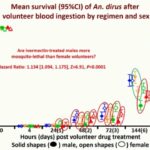
The development of Pfs230D1+R21 relies on the in vivo direct-skin-feeding (DSF) bioassay, in which mosquitoes feed directly on the skin to mimic natural parasite transmission. This method enables the measurement of surrogate efficacy endpoints that are “reasonably likely” to predict protective outcomes, providing a foundation for accelerated vaccine licensure. Modeling based on existing R21 and Pfs230D1 field efficacy data suggests that the combined vaccine could substantially reduce malaria burden in high-transmission zones, while simulations indicate that accelerated elimination may be achievable in low-transmission regions.
Mar 2025 — Feb 2030
$15.92M
France
Ghana
India
Kenya
Mali
Tanzania
United Kingdom
United States
Related Resources