Last Updated: 29/07/2024
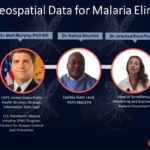
Spatio-temporal data integration for malaria elimination
Objectives
To build an ontology-based data integration framework that can predict where malaria incidence is likely to increase or decrease in Zimbabwe, to better target elimination efforts.
Isabel Cruz of the University of Illinois at Chicago in the U.S. will build an ontology-based data integration framework that can predict where malaria incidence is likely to increase or decrease in Zimbabwe, to better target elimination efforts. Eliminating malaria requires being able to monitor the changing patterns of infection risk across an entire region, which is affected by multiple factors including the location of health centers, temperature, rainfall, type of landscape, and population distribution. Integrating these data is difficult because they come from different sources and are measured at different scales (resolution). Also, monitoring how a disease changes over space and time has been particularly challenging. They will develop methods using string matching to first translate the data into a common spatial data format, and then ontology matching to integrate the data. They will also introduce a novel resolution method that addresses uncertainty in spatial and temporal resolutions. These will be used for mapping a pilot region, and tools will be built to identify and visualize patterns of malaria progression in time and space.
Apr 2017 — Nov 2018
$100,000
Related Resources