Last Updated: 18/06/2024
Artemisinin resistance and Plasmodium falciparum cell cycle (Chrono)
Objectives
The aim of this project is to generate new tools and using new technologies to identify and sort the small population of parasites able to survive artemisinin derivatives (ART) injury.
Specific objective is; To characterize this population by:
1) timing the cell cycle and its alteration at an unprecedented time resolution
2) identifying transcriptomic and proteomic signals associated with this population and
3) providing a comprehensive and molecular view ofits ability to resist injury.
National Institute of Health and Medical Research (INSERM), France
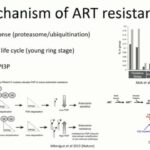
Malaria, caused by Plasmodium, is the deadliest parasitic disease in humans. The World Health Organization reports an impressive improvement of the situation in recent years, with a ~30-40% decrease in mortality rates in the 2000-2016 period. Nonetheless, malaria is still causing ~200 million clinical cases and ~500,000 deaths worldwide every year. This progress is mostly due to the combination of the massive use of artemisinin derivatives (ART) and the large-scale distribution of insecticide-treated bednets. ART is currently the last approved anti-malarial drug against which resistance has not yet spread widely. Therefore, ongoing malaria control and possible elimination efforts heavily rely on ART efficacy. Worryingly, since 2008 the efficacy of ART-base combination therapies has decreased in South-East Asia, due to the emergence and spread of ART resistance (ARTR). Spread of ARTR to sub-Saharan Africa, where most clinical cases and deaths occur, would be catastrophic and threaten the world’s malaria control and elimination efforts. ARTR was first defined by the delayed clearance time of P. falciparum parasites from the peripheral blood of Cambodian patients treated with ART monotherapy, associated with an increase in treatment failures. Strikingly, these ‘resistant’ parasites were fully or only slightly less sensitive to ART in vitro, as defined by standard growth inhibition assays under continuous drug pressure. Delayed parasite clearance in patients, however, correlated with the ring-stage survival assay (RSA), which measures the percentage of early ring-stage parasites surviving a clinically relevant 6 h-pulse of DHA. Parasites ‘resisting’ a first RSA display a similar survival rate when subjected to a second RSA. Clearly, such resistance does not respond to a classical resistance phenotype. Rather, they suggested that parasites subjected to ART at early developmental stages (rings) could escape aggression by entering in some form of dormancy or cell cycle dysregulation. The first and currently only ARTR markers are all mutations that cluster in the Kelch domain of the K13 protein. These K13 mutations associate with delayed parasite clearance in patients across South-East Asia. The K13 C580Y substitution – accounting for 80% of resistant cases – was shown to be sufficient for conferring resistance in Cambodian and laboratory P. falciparum strains using genome-editing technology. K13 is member of a class of ‘Kelch-like’ proteins that function as substrate adaptors that facilitate ubiquitin ligation by cullin-3 ligases. Mutations in Kelch domains are thought to decrease substrate binding, and thus substrate ubiquitination and degradation. Understanding of ARTR is still hampered by the lack of a formal investigation of activation and nature of cell cycle modulation/dormancy pathway(s). A deep understanding of the cellular and molecular basis of resistance is central to our capacity to fully circumvent the issue of recrudescence, and better grasp how P. falciparum adapts its growth to hostile environments such as drug-induced oxidative stress. As well as new knowledge, our project will deliver new tools and datasets for exploring the P. falciparum cell cycle, which should help the design of improved drugs and strategies to treat and eliminate ART-resistant parasites.
Sep 2019 — Mar 2023
$691,823
Related Resources