

WHO recommends the RTS,S/AS01 vaccine and some of the MESA correspondents share their thoughts!
Last week, the World Health Organisation recommended the world’s first malaria vaccine for use in children in sub-Saharan Africa and other regions with moderate to high Plasmodium falciparum malaria transmission. This marks a historic moment in the fight against malaria, a life-threatening disease.
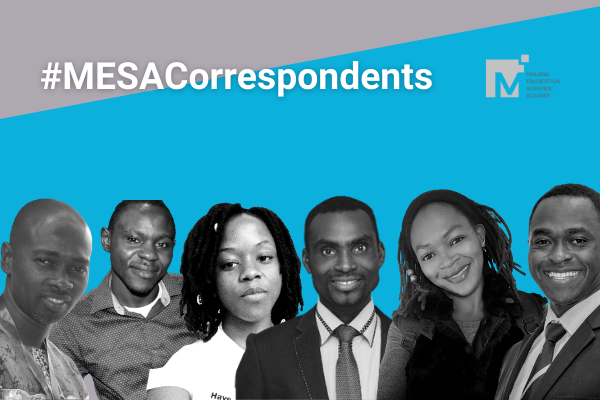
In this context, some of the MESA Correspondents have shared with us their views on this long-awaited milestone:
- Ivan Mbogo (Uganda), Okinawa Institute of Science & Technology, Japan
“Having grown up in Uganda, I suffered from malaria many times and lost a friend because of the disease. I think this is good news. The cost of treating malaria is high for many families that can’t afford the basic treatment.
In my opinion, WHO and other stakeholders should start thinking about how to sensitise people about the vaccine. From my experience of talking to people back home, some people are apprehensive about vaccination. There should therefore be drives to educate the public about the vaccine and how it works. Failure to do this will result in low vaccine acceptability.”
- Amelie Wamba, Centre for Research in Infectious Diseases (CRID), Yaoundé I and University of Buea, Cameroon
“As a researcher, I am thrilled to witness this remarkable moment and look forward to a positive outcome of the scale-up and a sustainable reduction of the malaria burden. The elimination of malaria, a poverty disease in Africa, would definitely improve living and health conditions in our local communities. However, the proper implementation and monitoring of this vaccine is necessary to optimize outputs.”
- Jackson Nyarko, Centre de Recherche Entomologique de Cotonou and London School of Hygiene & Tropical Medicine (CREC/LSHTM) Collaborative Research Programme, Republic of Benin
“In the typical indigenous society where I hail from, every worker in the health sector, from casual staff to the medical doctor, is presumed to have answers to all the medical challenges we face. And, when being a researcher in malaria and other vector borne diseases, the most taunting question I am asked frequently is: “Why isn’t there a vaccine for this deadly disease?” or “When will ‘you people’ find a vaccine to save us from malaria?”. So in my opinion the arrival of a malaria vaccine will, first of all, bring a sign of hope for the affected populations like my own people, and for those of us involved in this fight, it is a sigh of relief.”
- Leslie Diane Nkahe, University of Yaoundé I, Cameroon
“Acceptance of a new health tool by the population is not easy. Therefore, Governmental and non-governmental institutions, researchers, and health services should work together to popularize that vaccine in order to convince the population of the importance of self-protection. Of course, this vaccine should be combined with the existing control measures for an efficient malaria defeat.”
- Nkemngo Francis, Centre for Research in Infectious Diseases (CRID), Yaoundé I and University of Buea, Cameroon
“On a positive aspect, the arrival of the RTS,S vaccine is a valuable addition to the arsenal of tools for the elimination of malaria in endemic countries. Although a promised fruit after decades of clinical trials, it is not ‘a one-size-fits all strategy’ and must be integrated with other interventions such as insecticide-treated nets and anti-malaria drugs which have played major breakthroughs. Also, despite this significant milestone, funding towards regional malaria elimination must not plateau or regress.
The approval of the vaccine has renewed the hope again of a child in Africa being able to survive the sufferings due to malaria and grow to make a significant impact in the society. We look forward to seeing a change of the statement ‘A child dies every 2 minutes of malaria in Africa’ to ‘Everyday, a child in Africa defeats malaria attack with a smile’. This will only be achieved through powerful community engagement, media collaboration and strengthening primary health care systems, particularly in rural communities. For policymakers and governments, the vaccine is now a test for implementation; for funders, it is a boost to prioritise additional funding; for researchers, it is a motivation and an eye-opener to be aware of the emergence of potential vaccine escape strains; and for communities- it calls for a fireside feast.”
- Udoka Nwangwu, National Arbovirus and Vectors Research Centre (NAVRC), Nigeria
“The RTS,S/AS01 malaria vaccine may be a game-changer in the fight against malaria. This is because of its ability to significantly reduce severe malaria in children. Also, it targets Plasmodium falciparum malaria -the most dangerous and widespread parasite in high-burden countries. As Africa consistently accounts for over 90% of malaria mortality in the recent past, the RTS,S vaccine in combination with other control tools may significantly bring down malaria mortality and morbidity in the continent.
Given its safety, I think the Ministries of Health in all the moderate to high-burden countries should adopt it for inclusion in their routine immunization programmes (as a national malaria strategy, without delay).”
