Last Updated: 24/02/2025
Moving from estimating broad transmission patterns to quantifying the total number of malaria infections: Filling a critical gap in planning for malaria elimination
Objectives
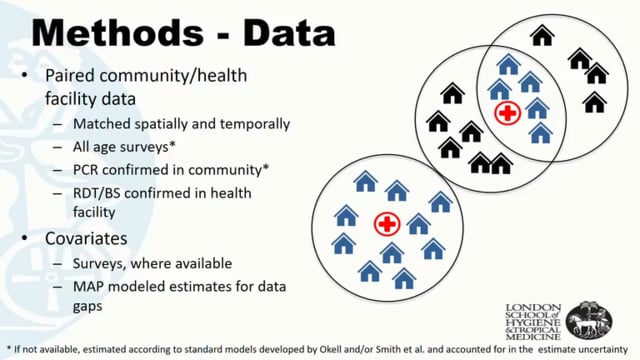
The main objective of this study is to understand the association between the total number of infections defined by sensitive molecular methods in the community and the proportion of those detected via routine health facility based malaria surveillance across the full spectrum of transmission intensity.
In addition, this study aims to: (i) explore how changes in malaria epidemiology impact the anti-malarial immune profile (characterized by multiplex antigenic platforms); and (ii) build a geostatistical model to estimate the number of infections in malaria endemic areas where no current community data exist.
London School of Hygiene and Tropical Medicine (LSHTM), United Kingdom
Improving the accuracy of estimates of malaria burden is a vital area of research to inform control programmes for progress and advocacy. Typical malariometric surveillance and programmatic decision-making relies on passively collected data at health facilities. However, capturing asymptomatic infections into any routine surveillance system is not feasible as these individuals do not seek treatment and data are likely to underestimate the true number of infections. Understanding the pervasiveness of malaria infections and how this translates into cases detected by routine surveillance will facilitate effective targeting and use of interventions as well as planning for elimination.
Stresman G. (2019) - PMID: 31474558Stresman G. (2020) - PMID: 32277908Stresman G. (2020) - PMID: 33119589Stresman G. (2022) - PMID: 38455281
Jun 2017 — Sep 2022
$323,000
Related Resources